02 Clay Process 01
Bone China
Bone ash in the body makes it translucent and strong, and is why a cup rings.
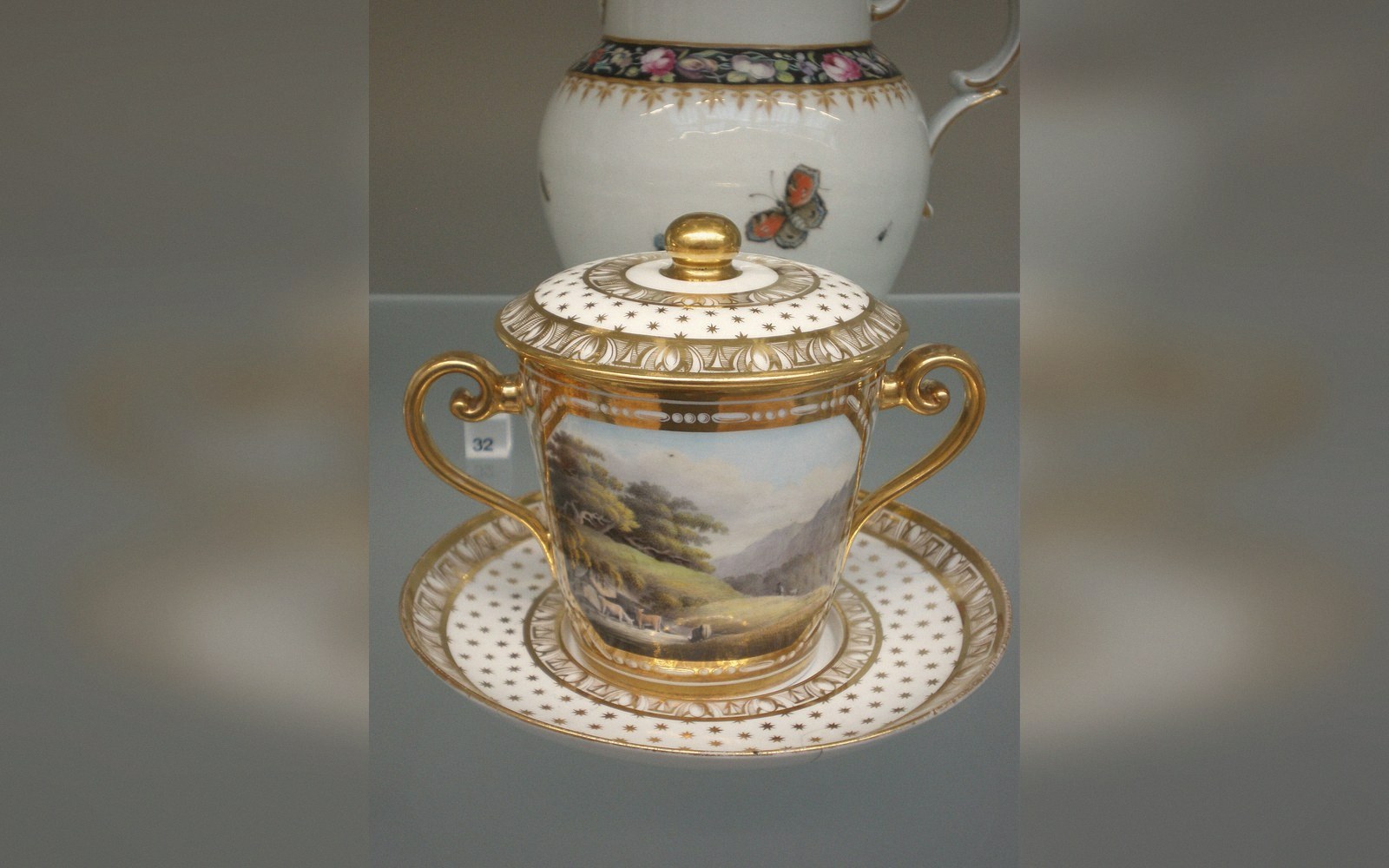
The material that makes it ring
Bone china is defined by what is not obviously there. Hold a piece to a lamp and the clay body glows; tap the rim and it rings with a note closer to a bell than a pot. Both effects come from calcined bone ash — typically 50 per cent of the body by weight — combined with china stone and kaolin. It is among the hardest of the major whiteware bodies to make.
The formula is English, and unusually, the name is exact. Josiah Spode II, working in Stoke-on-Trent in the last years of the eighteenth century, is credited with stabilising the triaxial recipe that became the industry standard: roughly half bone ash, a quarter china stone, a quarter china clay. Bone ash — made by calcining cattle bones, then grinding them to a fine white powder — had been used experimentally before Spode, but the proportions he fixed gave a body that vitrified at a lower temperature than hard-paste porcelain and came out of the kiln consistently white. Wedgwood, whose operations have centred on Stoke-on-Trent since the eighteenth century, followed; so did Royal Crown Derby in Derby. The body was adopted so completely that it displaced hard-paste porcelain in most British fine-china production within a generation.
Why bone ash changes the physics
Calcium phosphate — what bone ash primarily is — does several things at once during firing. It fluxes the body, lowering the vitrification temperature, but at the same time forms a glass-ceramic structure that is genuinely strong in tension for its thinness. It also raises translucency: light scatters less inside a calcium phosphate glass than it does in conventional ceramic bodies. That combination — thin, strong, translucent — is structurally unusual. A standard earthenware body achieves opacity partly through bulk; bone china achieves strength without it.
The ring comes from the same structural density. A cup with a stone or earthenware body damps vibration quickly; the tightly bonded, low-porosity glass-ceramic of bone china sustains the note. Potters use it as a quality indicator: a dead thud often points to a crack or a firing fault invisible to the eye.
Materials and method
02 Clay · lifted out of the flow| Bone ash | calcined and ground cattle bone, roughly 50% of the body by weight; provides translucency and acts as a flux |
| China stone | a partially decomposed granite; roughly 25% of the body; contributes to vitrification |
| Kaolin (china clay) | the remaining ~25%; gives workability and fired whiteness |
| Biscuit firing | first and higher-temperature firing; where the body vitrifies and must be supported against deformation |
| Glost firing | second firing at lower temperature; fuses the glaze |
| Enamel firing | third, lowest firing; fixes on-glaze decoration |
Making it: where it gets difficult
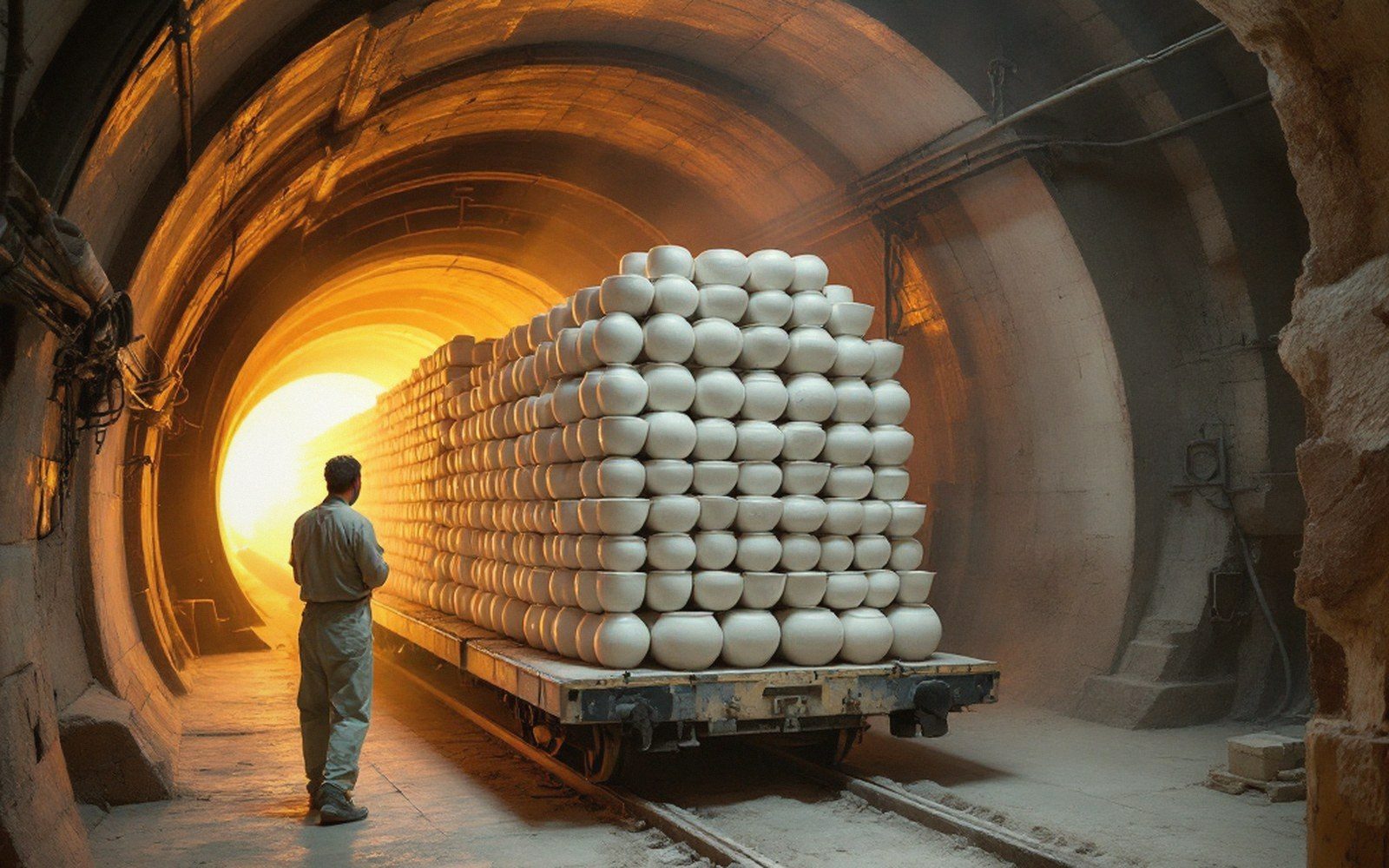
Bone china is notoriously difficult to fire. The body has a very narrow temperature window — a few degrees separates an underfired, porous piece from a slumped one — and it softens considerably before it vitrifies, which means ware must be supported carefully in the kiln, or it will deform. Manufacturers use purpose-made refractory setters and stilts to hold each piece in shape through the biscuit firing, the first and higher of the two main firings.
The second firing, the glost firing, fuses the glaze at a lower temperature. Between biscuit and glost, the ware is inspected and sorted; bone china factories have historically had high rejection rates, which is part of what keeps the cost of a cup up. Decoration — whether applied by hand, transfer print or lithographic decal — typically goes on after the glost and is fixed in a third, lower enamel firing.
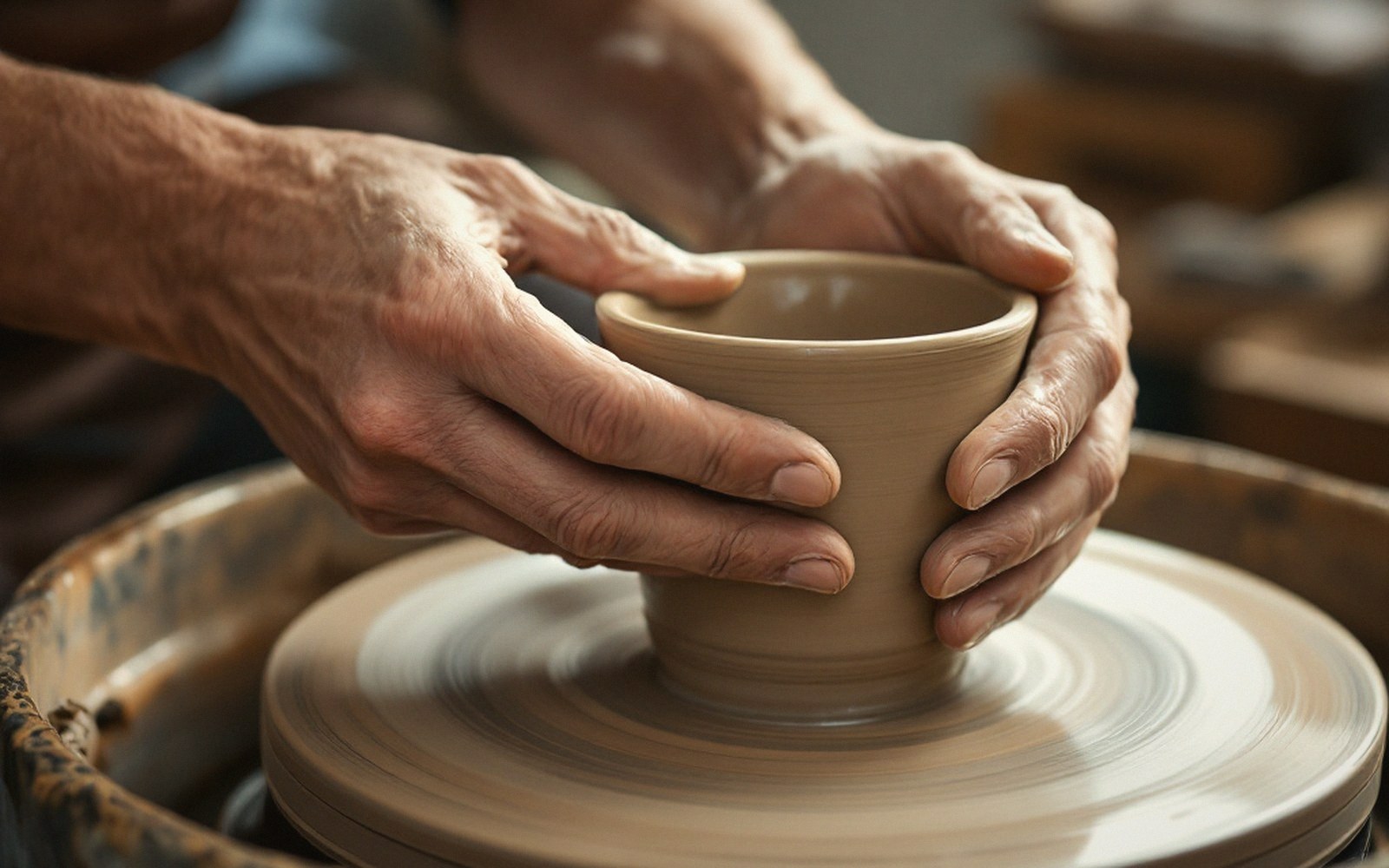
Throwing and jiggering both feature in bone china production. Flatware — plates, saucers — is jiggered, the clay body pressed over a rotating profile tool to achieve consistent thickness. Cups and hollow ware are typically made by jiggering or slip-casting, where liquid clay body is poured into porous plaster moulds that absorb water and leave a shell. Hand-throwing survives in studio and short-run work, but the body's plasticity is low enough that it demands skill well above the level required for earthenware.
Where it is still made
Stoke-on-Trent remains the centre of British bone china production, though the industry is smaller than it was in the mid-twentieth century. Several manufacturers — among them Wedgwood — still hold bone china output in the Potteries. What has not changed is the material itself: the recipe Spode fixed more than two hundred years ago remains, by British and international standard, the definition of the body. True bone china, under ISO 5992 ↗, must contain a minimum of 30 per cent bone ash — most British production sits considerably above that threshold, and closer to Spode's original half.