01 Cloth Process 01
Harris Tweed
By an Act of Parliament of 1993 the cloth may only carry the Orb mark if it is dyed, spun and finished in the Outer Hebrides and handwoven by an islander at their own home.
Harris Tweed is a wool cloth made on the Isle of Lewis, Harris, Uist and Barra. It is handwoven by islanders working at looms in their own homes, and the yarn they use has been dyed, spun and finished in the Outer Hebrides before it reaches them. None of those conditions is a tradition or a voluntary standard. Every one of them is a legal requirement, fixed by the Harris Tweed Act 1993 and enforced by the Harris Tweed Authority ↗, the statutory body that inspects the cloth and stamps it with the Orb mark — the certification that tells a buyer this is the real thing.
From fibre to loom
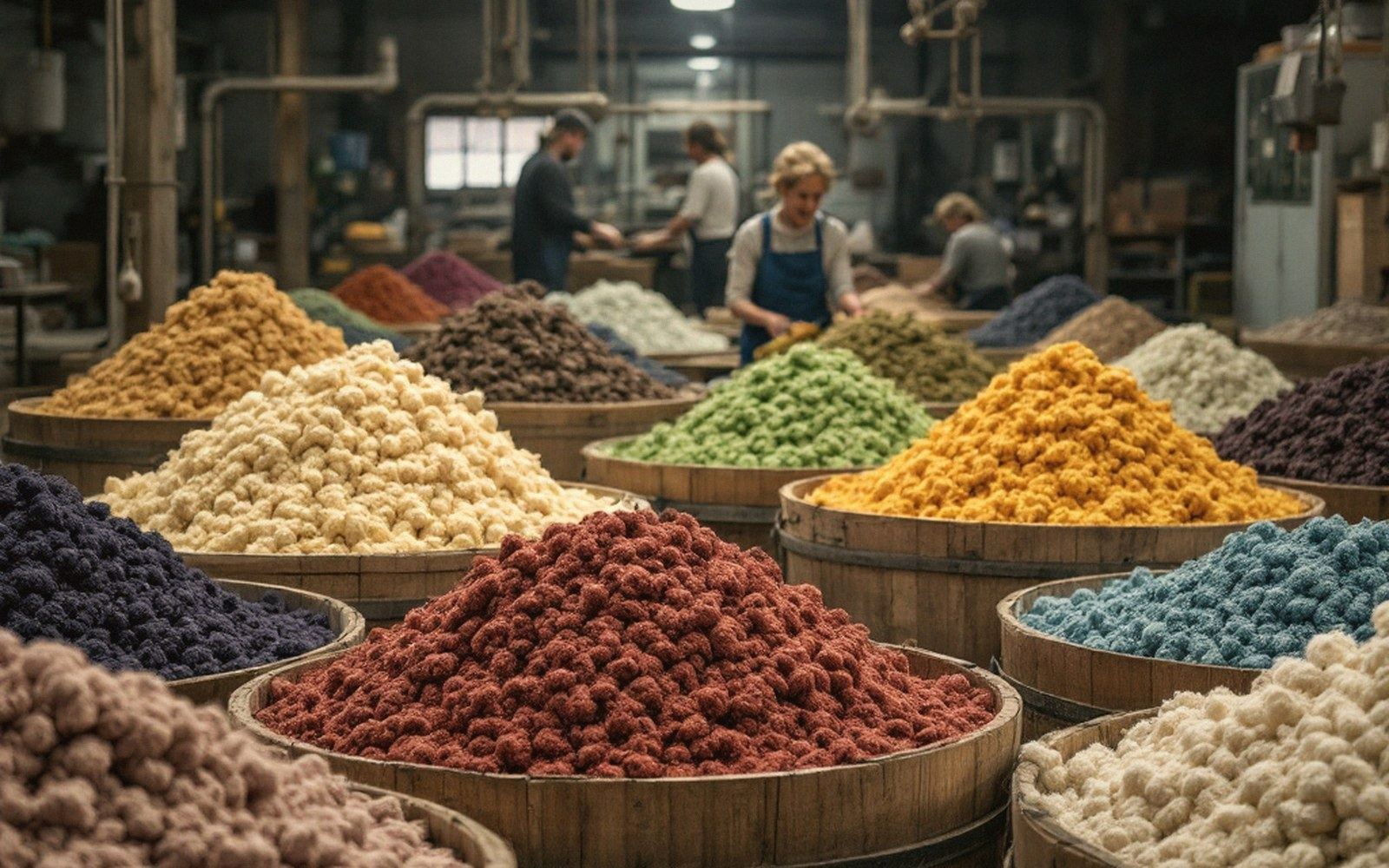
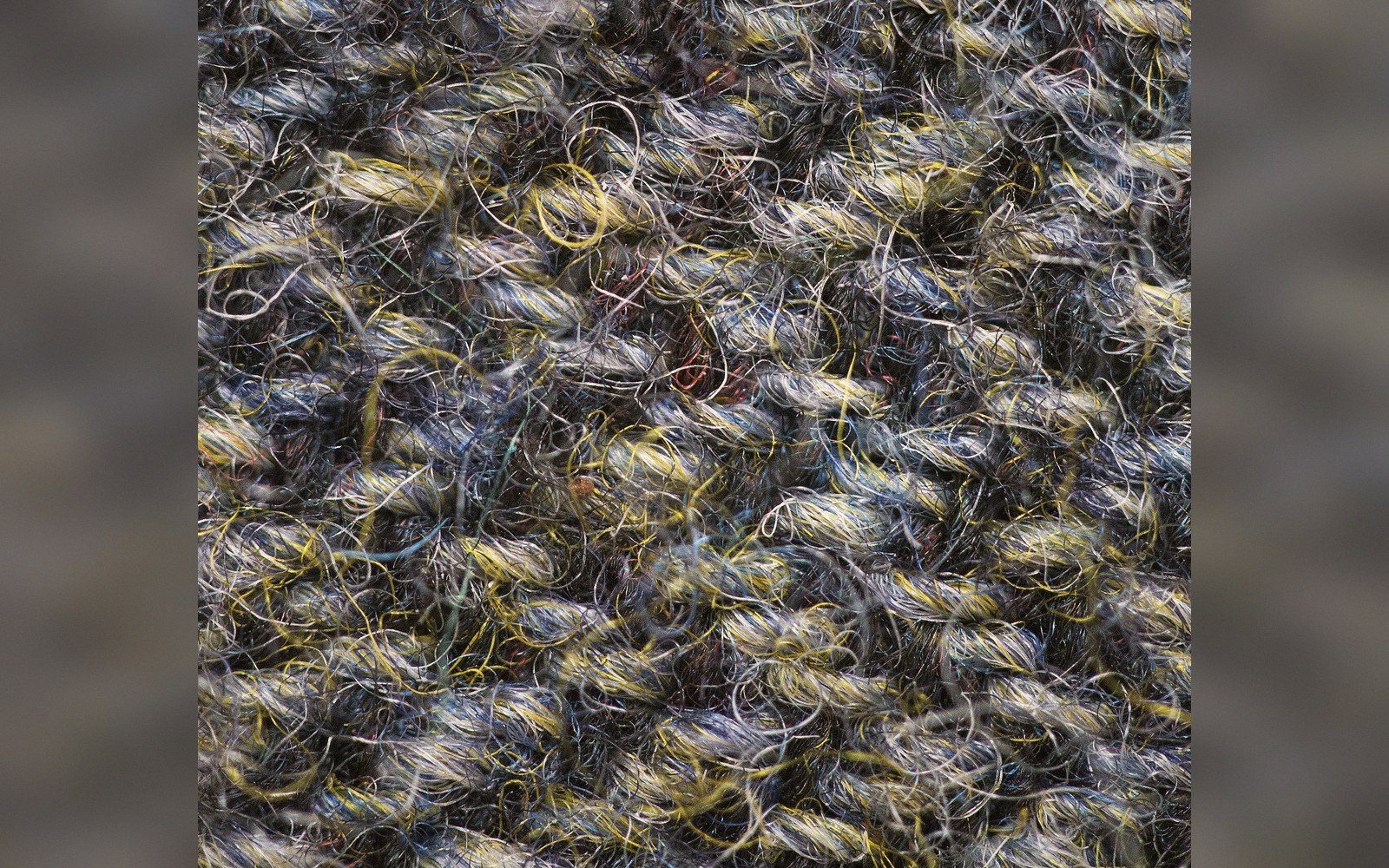
The raw material is pure new wool, sourced from the British Isles. It arrives at the mills — principally Harris Tweed Hebrides and Carloway Mill, both on Lewis — as raw fleece, and the first operation is to open and blend the fibres. Colour, crucially, goes in at this stage. Dyeing in the wool — colouring loose fibres rather than yarn or woven cloth — is what gives Harris Tweed its characteristic, slightly flecked appearance. When blended fleeces of different dyed colours are carded together, the tones merge without fully dissolving, producing the heathered effect that flat-dyed fabric cannot replicate. A skilled blender can hit a particular shade by adjusting the ratio of individual coloured fibres, the same way a painter mixes from a palette — except the medium is fibre and the result is fixed by the card.
After dyeing, the wool is carded into a continuous rope of loosely aligned fibres called a sliver, then drawn and spun into yarn. Harris Tweed is not a worsted — worsted yarn is combed to align the fibres parallel before spinning, producing a smooth, hard-wearing thread used in suiting. Harris Tweed uses a woollen-spun yarn, in which the fibres are left in their natural disorder, giving the finished cloth its soft, slightly irregular surface and the air pockets that make it so warm relative to its weight. All spinning happens in the mills on Lewis; the Harris Tweed Act is explicit that this stage may not take place on the mainland.
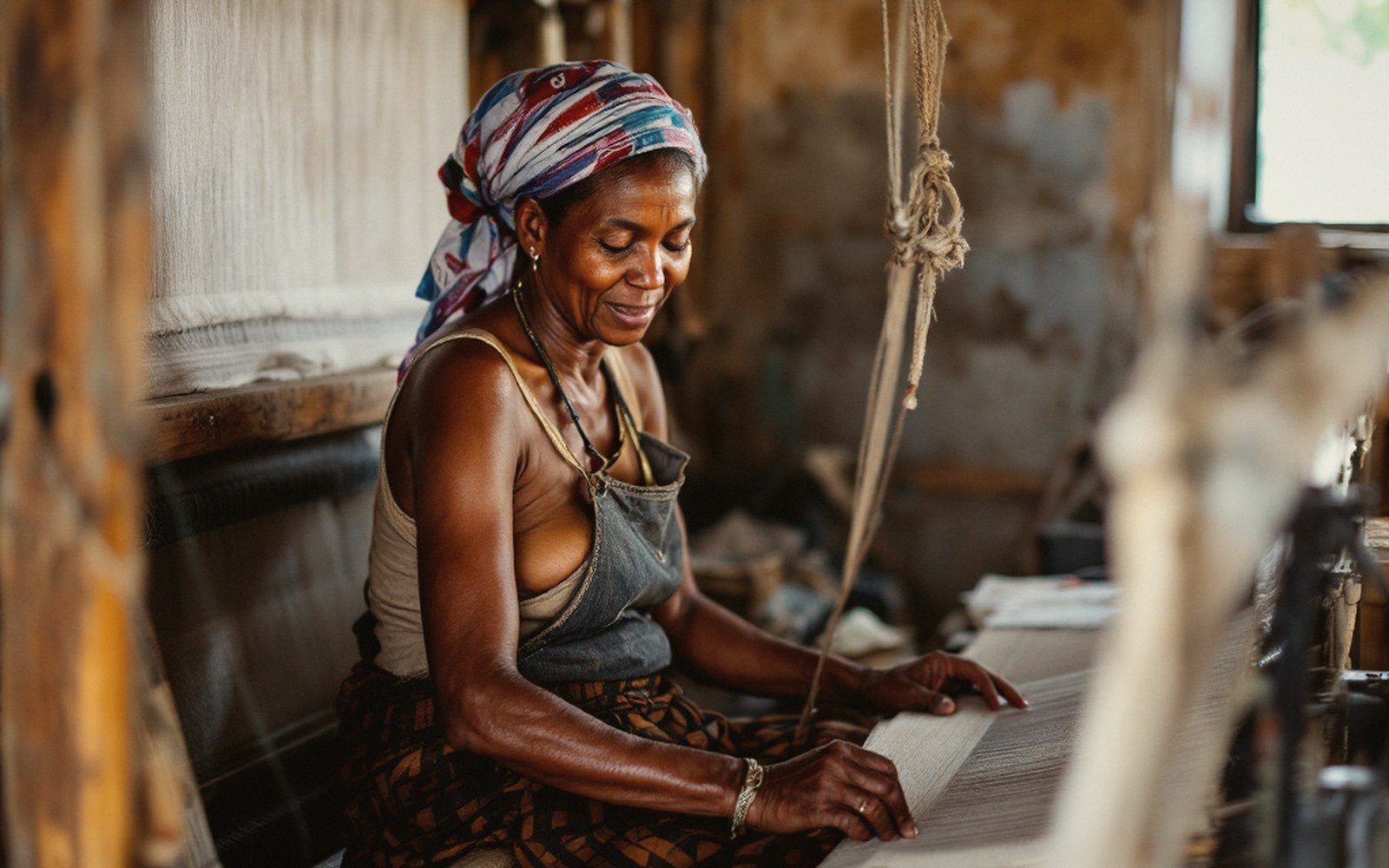
When the spun yarn is ready, it is wound onto cones and delivered to the weavers — islanders who work not in the mills but in small outbuildings beside their own houses. The loom is a Hattersley double-width treadle loom, a mechanical device powered by the weaver's feet, hands and body weight. It is not a hand loom in the sense of a frame strung with individual heddles — it is a purpose-built domestic dobby loom — but it is emphatically not powered by electricity, and it requires continuous physical attention. The weaver throws the shuttle, beats the weft, and changes the shed by pressing treadles; a length of cloth that will become six jackets takes a full working day. There are around six hundred active weavers on the islands, spread across Lewis, Harris, Uist and Barra, each working alone. The structure of the industry — centralised spinning, distributed weaving — has remained roughly the same for over a century.
How the Orb works
01 Cloth · lifted out of the flow| Harris Tweed Act 1993 | the statute that legally defines the cloth and the mark |
| Harris Tweed Authority | the statutory body; carries out inspection and applies the stamp |
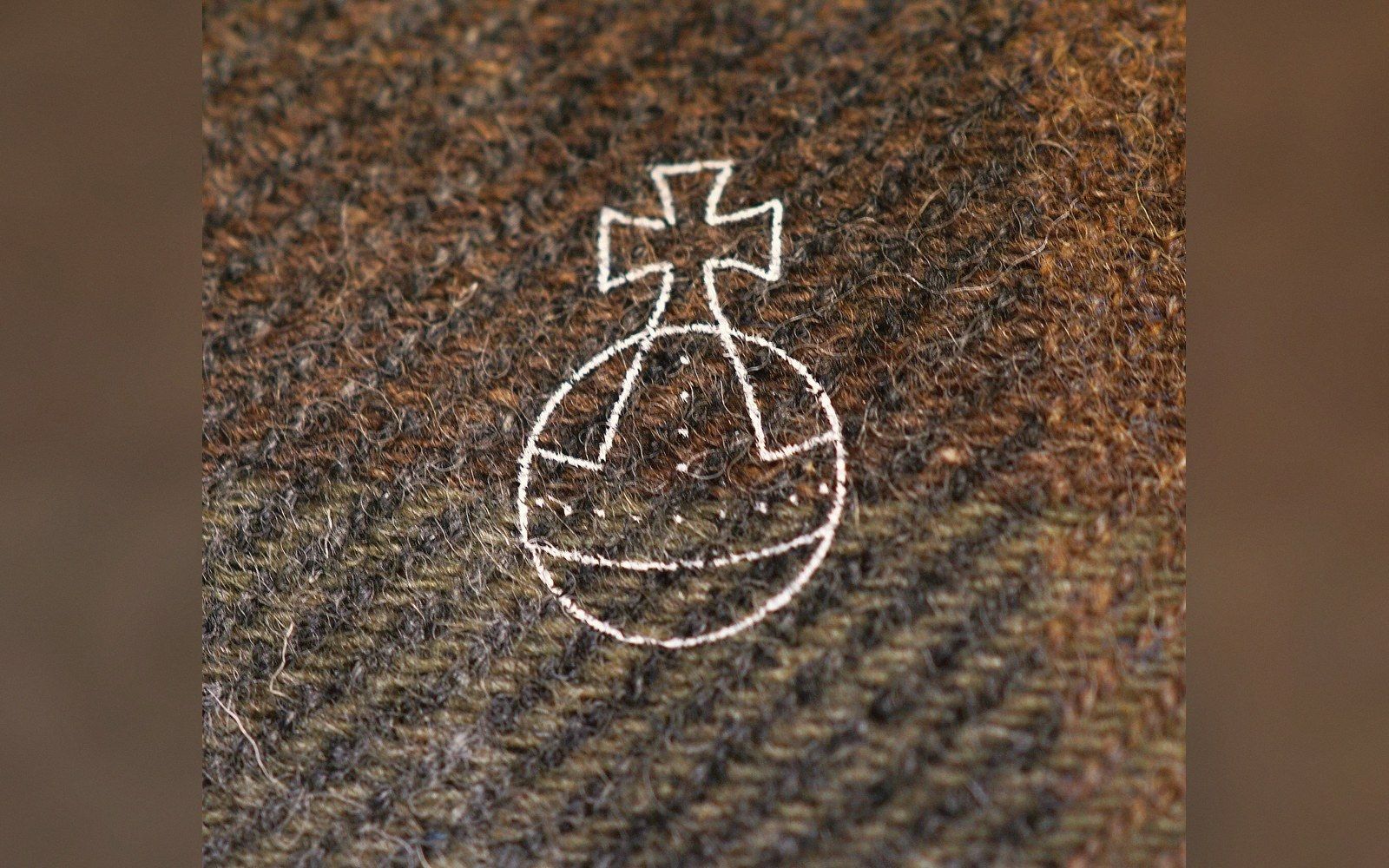
| Orb mark | stamped at one-metre intervals on inspected cloth; shows globe, cross, and the words "Harris Tweed / Handwoven by the islanders of the Outer Hebrides" |
| First registered | 1909, by the Harris Tweed Association |
| 1964 Court of Session ruling | established that finishing must remain on the islands; the 1993 Act encoded this in statute |
Finishing and the Orb
Once a length of woven cloth comes off the loom, it goes back to the mill. The weave at this point is open and feels harsh; finishing closes and softens it. The main operation is milling, also called fulling: the cloth is wetted and agitated under pressure, which causes the wool fibres to lock together and the fabric to shrink and thicken. The degree of milling is a choice — more produces a denser, more felted handle, less leaves a lighter, more open cloth — and it is one of the variables that distinguishes one mill's output from another.
After milling, the cloth is washed, dried and pressed. The finished piece is then inspected by an officer of the Harris Tweed Authority, who checks that the cloth meets the standard — that it was genuinely handwoven by an islander at their home, from yarn spun on the islands from pure new wool. If it passes, the inspector stamps each metre with the Orb mark, a device showing a globe surmounted by a cross, with the words "Harris Tweed" and "Handwoven by the islanders of the Outer Hebrides". The mark was first registered in 1909 by the Harris Tweed Association, and the 1993 Act gave it statutory protection — meaning that no court decision or commercial pressure can redefine the standard downward without primary legislation.
The only cloth in the world whose definition is written into an Act of Parliament
That protection has been tested. The most significant legal battle came in 1964, when Kenneth Mackenzie Ltd sought a ruling that cloth woven on Lewis but finished on the mainland could still carry the Orb. The case reached the Court of Session in Edinburgh, which found for the Harris Tweed Association: finishing had to happen on the islands. The 1993 Act built that ruling into statute and added further precision, leaving no ambiguity about what the Orb certifies. It certifies a place, a process and a person — the island, the home loom, and the weaver who sat at it.
Why it holds
Harris Tweed's resilience as a product rests on a set of constraints that would be ruinous for most textiles. The weaving cannot be mechanised without breaking the law. Production cannot be scaled by moving processes offshore. There is no version of the product made cheaply from cheaper materials, because any such version is legally a different product. These constraints, which look like competitive disadvantages, are also the reason the cloth commands the prices it does and retains a market in industries — outerwear, footwear, interiors — where synthetic alternatives have taken almost everything else.
The weight and density of a standard Harris Tweed — typically around 450 to 700 grams per square metre — gives it a warmth and durability that have made it a persistent choice for working outdoor garments, from deerstalkers to naval watch coats. Its surface resists wind and light rain without a coating. It recovers its shape after compression in ways that woven synthetics do not, because wool fibre is crimped and elastic at the molecular level. The irony is that a cloth made by six hundred individual home weavers in the North Atlantic, under constraints that prevent any efficiency that would disrupt the tradition, turns out to be genuinely and measurably good at the things a heavy woven wool cloth needs to do.