02 Clay Process 03
The Glost Firing
The second firing that fuses the glaze, and where most losses happen.
The most dangerous fire
Biscuit firing hardens the clay body. Glost firing — from the archaic English glosten, to gleam — fuses the glaze to that body, sealing the surface into a glassy, impermeable skin. It sounds straightforward. It is not.
By the time a piece reaches the glost kiln, weeks of labour are already inside it: throwing and jiggering, drying, first firing, careful hand-decoration, glaze dipping or spraying. The glaze itself — a suspension of silica, flux and metal oxides ground fine — sits on the surface as dry powder until the kiln brings it to temperature. Then it melts, flows, and either settles perfectly flat or crawls, pinholes, blisters and bloats. Most of the losses in a pottery run happen here.
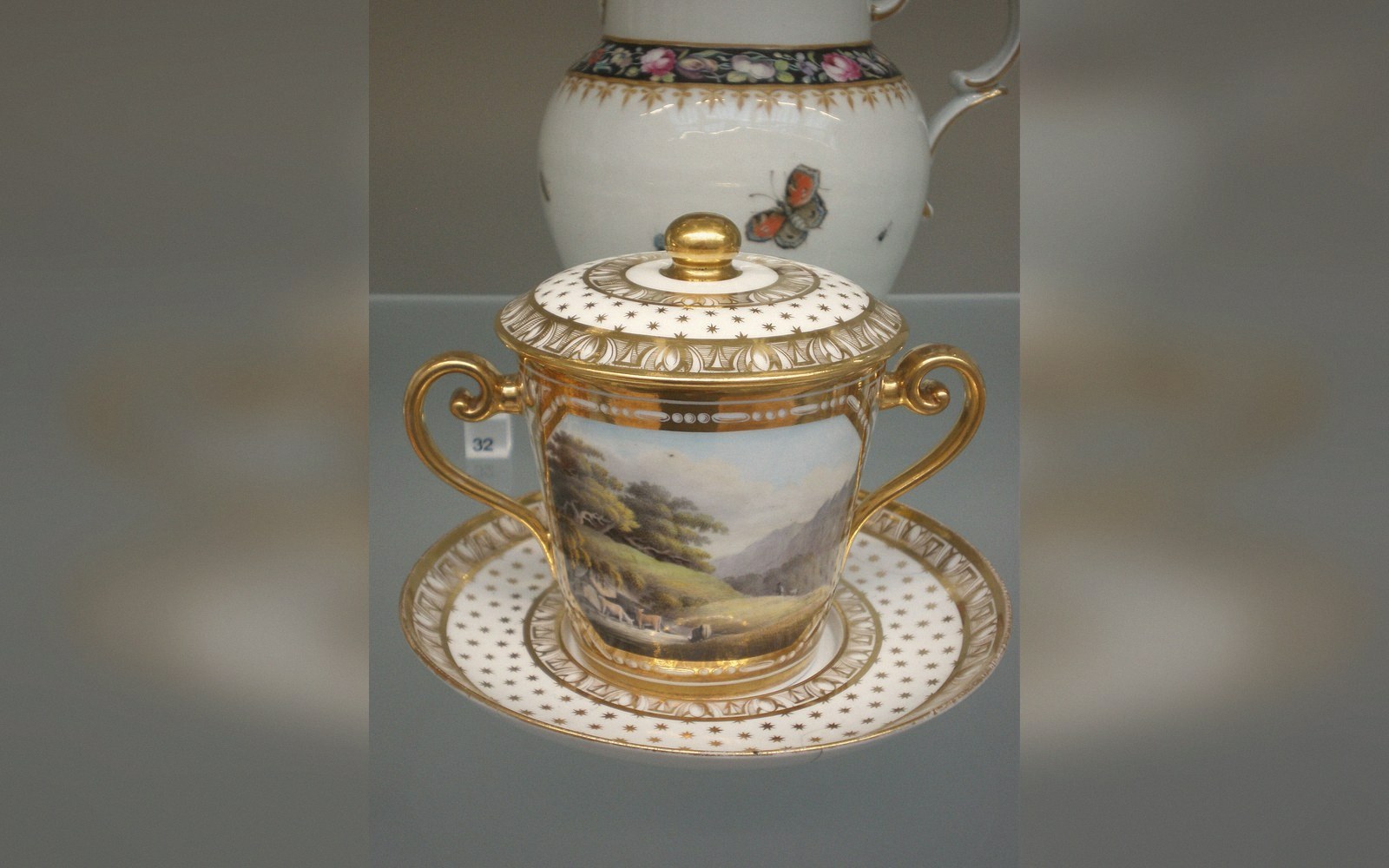
Temperature control is the governing variable. Earthenware glazes mature between roughly 1,000 °C and 1,150 °C; stoneware and porcelain glazes higher still. A few degrees too low and the glaze remains dull and underfired, porous in its gaps. A few degrees too high and it runs off the piece onto the kiln furniture — the refractory props and shelves that hold ware during firing — fusing the pot to the shelf and destroying both. The bone china bodies made in Stoke-on-Trent are fired at tightly controlled temperatures because the translucent body is itself near its deformation point while the glaze is still moving.
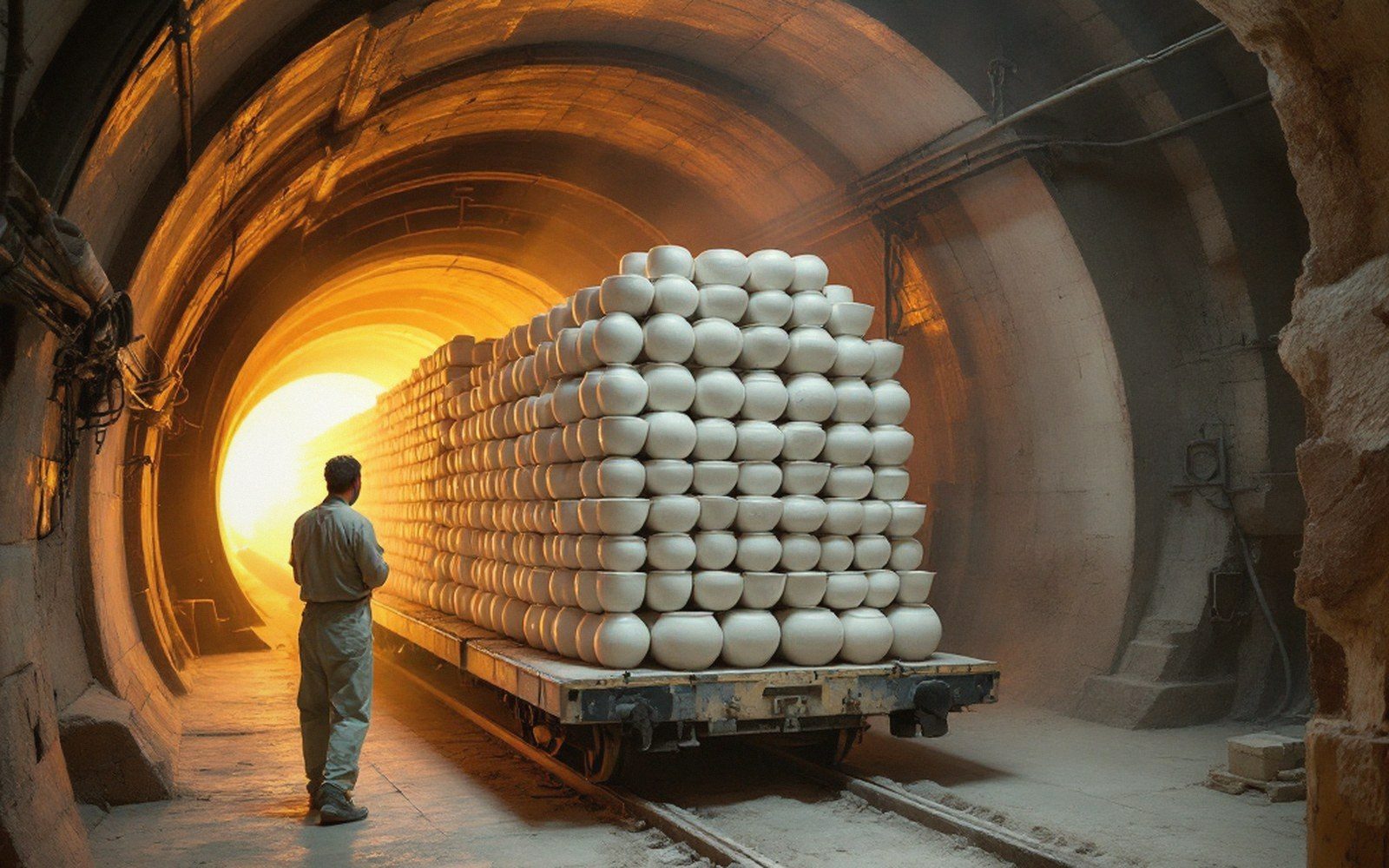
To prevent pieces sticking to each other or to the shelf, glaze is wiped or wax-resisted from the foot before loading. Pieces are loaded with deliberate gaps between them — glost kilns hold less ware per cubic metre than biscuit kilns for this reason. In traditional bottle kilns, now almost entirely gone from the Staffordshire skyline, a saggar (a lidded fireclay box) enclosed each piece and protected it from flame and ash. In modern tunnel and intermittent kilns, precise atmosphere control does much of that work instead.
Key terms
02 Clay · lifted out of the flow| glost | the second firing that fuses glaze to biscuit ware; from an archaic English word meaning to gleam |
| kiln furniture | refractory props, shelves and cranks that support ware during firing |
| saggar | a lidded fireclay box protecting ware from direct flame in bottle kilns |
| crazing | a network of fine cracks in the glaze, caused by uneven contraction during cooling |
| biscuit | pottery that has been once-fired to harden the clay body but not yet glazed |
As the kiln cools, the glaze passes back through its solidification point and locks in place. Cool too fast and differential contraction cracks the glaze away from the body — a defect called crazing, sometimes prized in studio ceramics, ruinous in tableware. Cool too slowly and a production schedule fails.
Some pieces — those with overglaze decoration applied after glost, with enamels or gilding — return for a third, lower-temperature enamel firing. But it is the glost firing that decides whether a piece survives its making. Most losses, most decisions, most craft judgement happen in those few hours of heat.
The second time a piece goes into the kiln, it is wearing its glaze — and everything that can go wrong now will.