05 Leather Process 03
Tanning
Vegetable tanning takes months and leaves a leather that ages rather than degrades.
The Long Soak
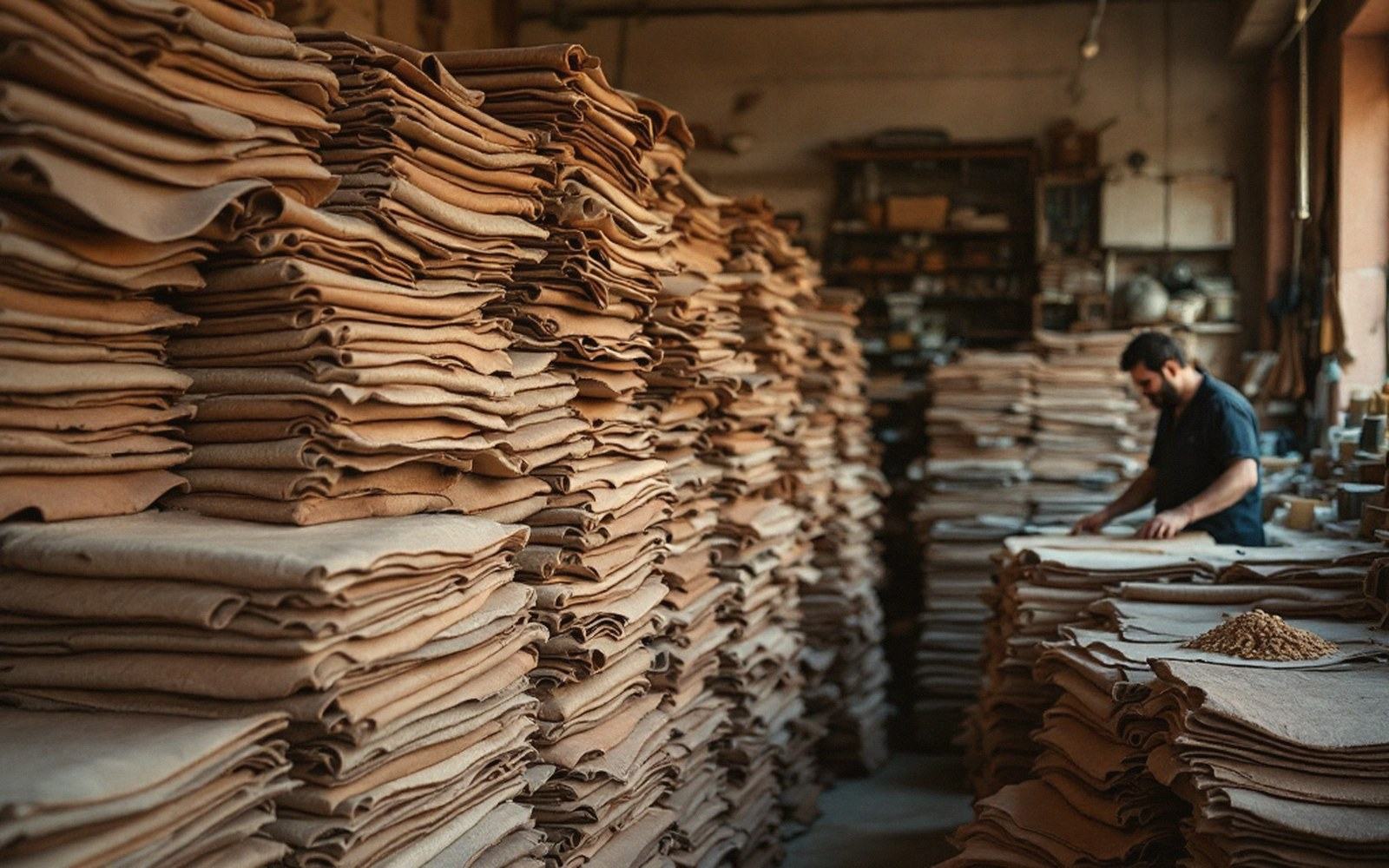
Hide arrives at the tannery salted or dried, stiff and perishable. Before anything else, it is soaked back to suppleness and limed — submerged in an alkaline bath that loosens the hair and begins to open the fibre structure. Fleshing follows: the inner membrane scraped clean on a beam. What remains is the raw pelt, ready to absorb tannin.
Vegetable tanning uses tannin extracted from bark — oak most commonly in Britain, mimosa or quebracho in imported liquors — dissolved in water. The pelt descends through a sequence of pits, each one stronger than the last, spending days or weeks at every stage. The whole passage can run to twelve months or more, the slowness unavoidable: rush the uptake and the tannin fixes only at the surface, leaving the interior soft and prone to rot. Done slowly, by contrast, the fibres are bound at every depth, cross-linking proteins into a stable, water-resistant matrix. That is leather.
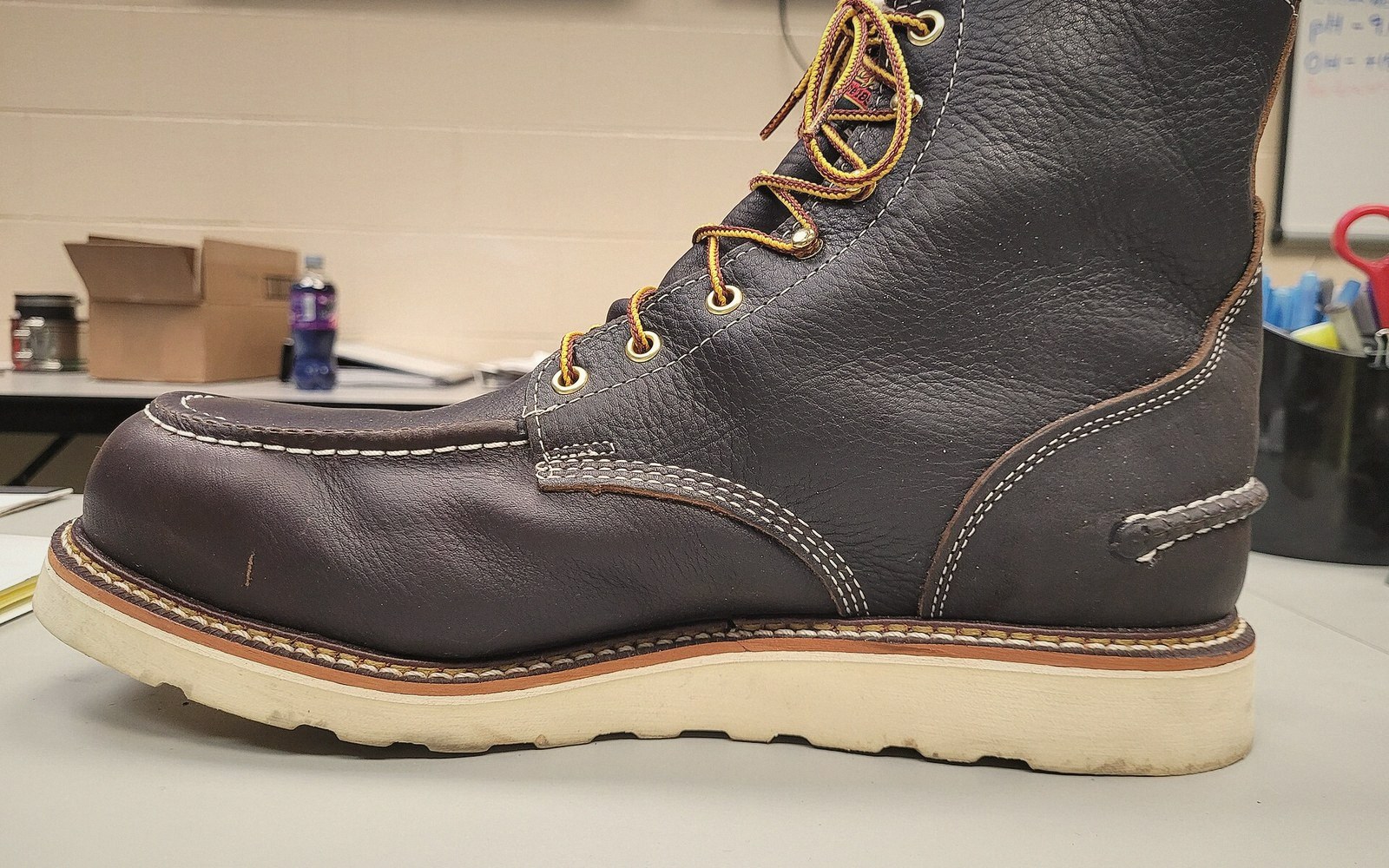
Chrome tanning — introduced commercially in the 1880s — compresses the same chemistry into a matter of hours using chromium salts. It dominates global production and produces a softer, more pliable hide suited to uppers, linings and garments. But it does not age. Vegetable-tanned leather, over years of use, darkens, hardens where it takes pressure, moulds to its owner and develops a patina ↗ that chrome leather cannot replicate. For belts, bridles, saddlery, sole leather and heavy bag work — anything expected to outlast its first owner — the long process still holds.
Britain once had hundreds of bark-tanning pits. The industry contracted through the twentieth century as chrome tanning scaled and cheap hides flooded the market. A small number of traditional tanneries survive, among them J. & F.J. Baker in Devon, working pits that have been in continuous use since the nineteenth century. The process there is largely unchanged: bark, water, time, and a cycle that cannot be meaningfully shortened. The Goodyear welt shoe trades on exactly this durability — a vegetable-tanned insole that stitches, flexes and lasts.
Key materials and stages
05 Leather · lifted out of the flow| Liming | alkaline bath that loosens hair and opens the pelt's fibre structure |
| Vegetable tanning | tannin from bark (oak, mimosa, quebracho) in sequential pits over weeks or months |
| Chrome tanning | chromium-salt process, hours rather than months; global standard since the late nineteenth century |
| Fleshing | scraping the inner membrane from the raw pelt before tanning |
Bark, water, time: how hide becomes leather that lasts a century.