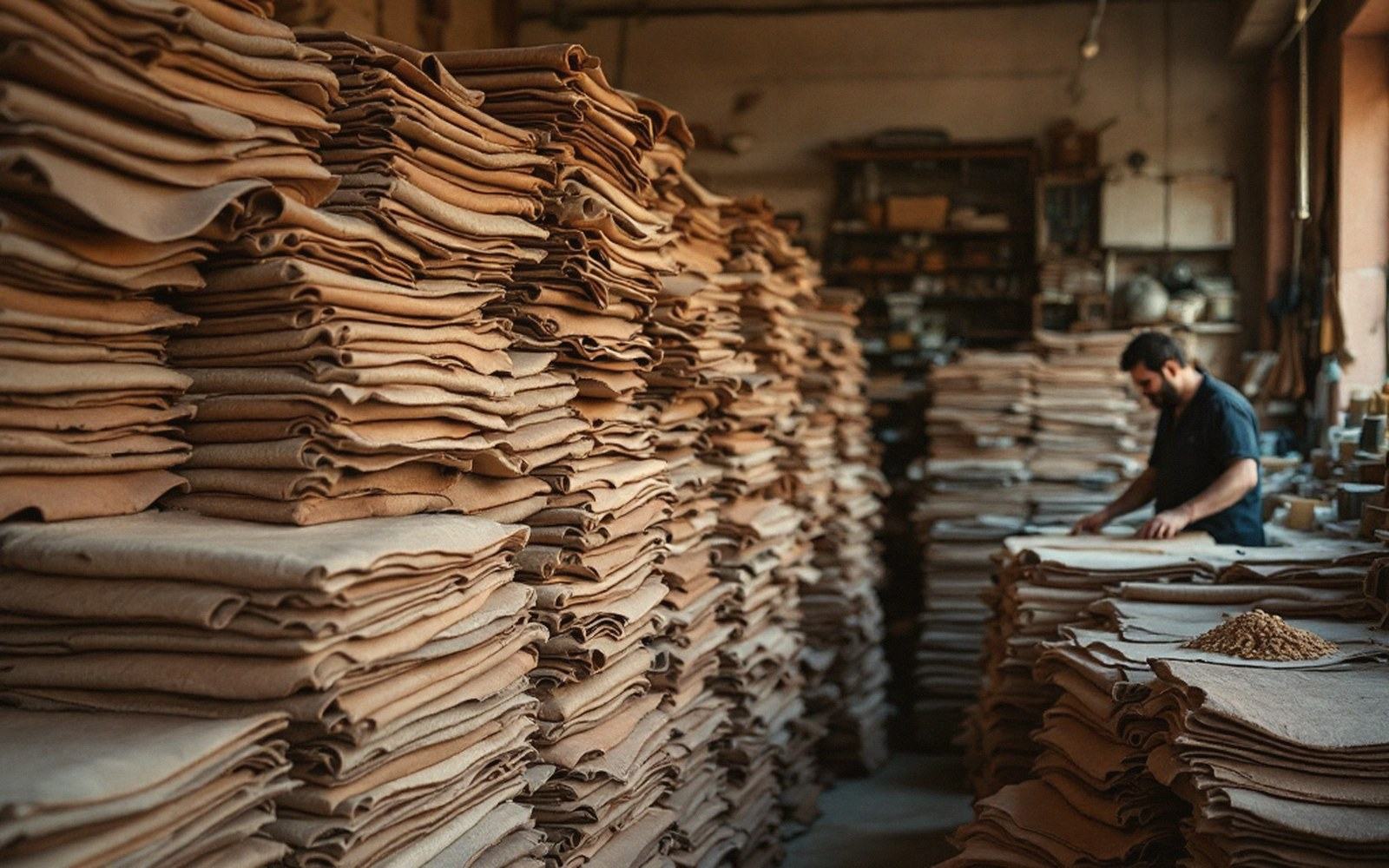
05 Leather Process 02
Lasting
Pulling the upper over a wooden last is where the shape is actually decided.
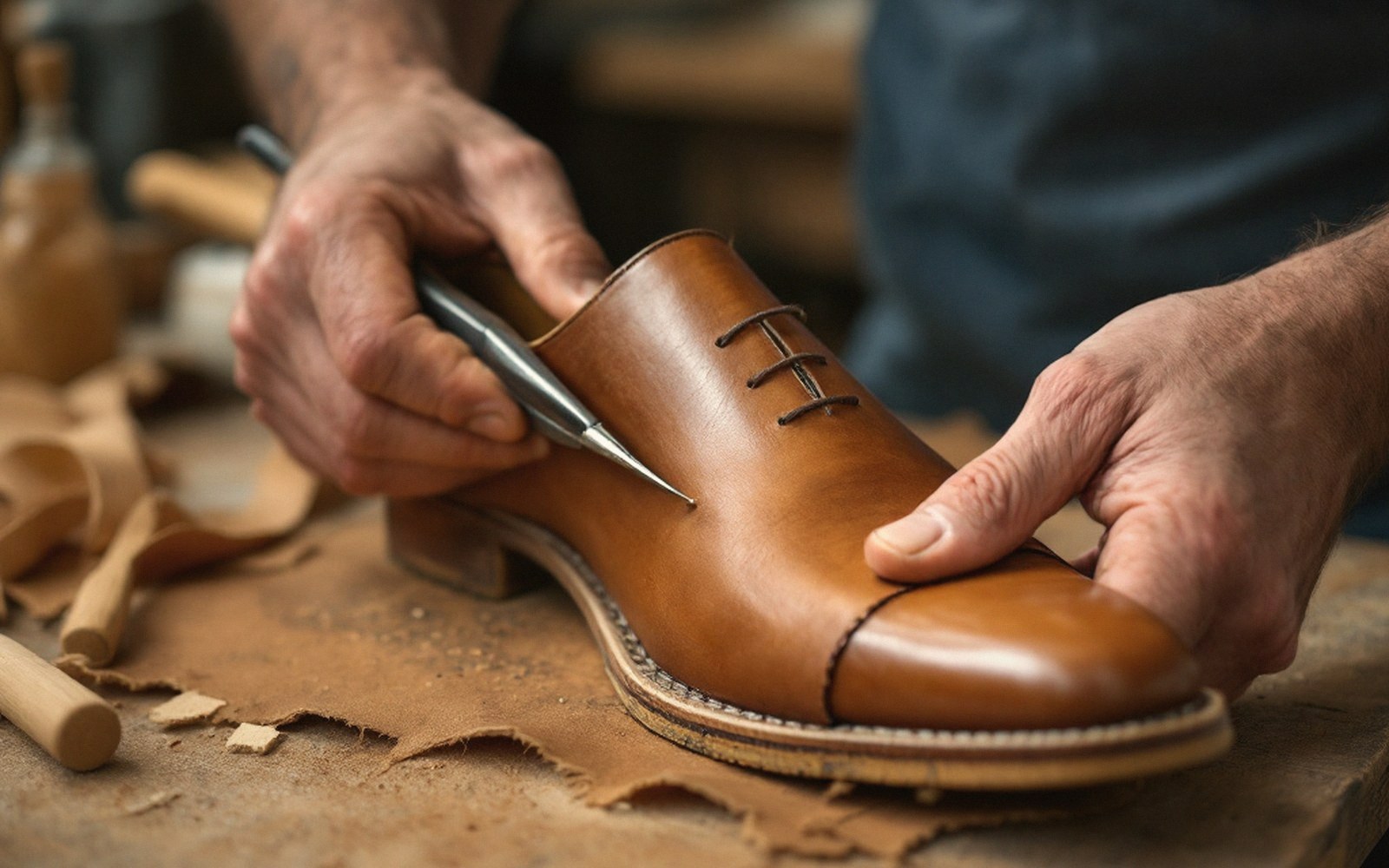
The moment the shoe becomes a shoe
The upper is cut, stitched and closed. The sole is prepared. But until the leather is pulled over a last and held there under tension, nothing has a shape. Lasting is the operation where a flat assembly of panels becomes a three-dimensional object, and the last — a wooden or plastic form modelled on a human foot — is the real author of the finished shoe.
Lasts are specific to each style, width fitting and size. A manufacturer may hold thousands of them, numbered and racked, each one a precise specification: the toe spring (the upward curve at the tip that allows the foot to roll through a stride), the heel pitch, the ball girth, the waist. Northampton, which has been at the centre of English welted shoemaking since at least the seventeenth century, has workshops where these profiles are still cut and adjusted by hand. A last that is a millimetre wrong produces a shoe that is a millimetre wrong, multiplied across every pair drawn from it.
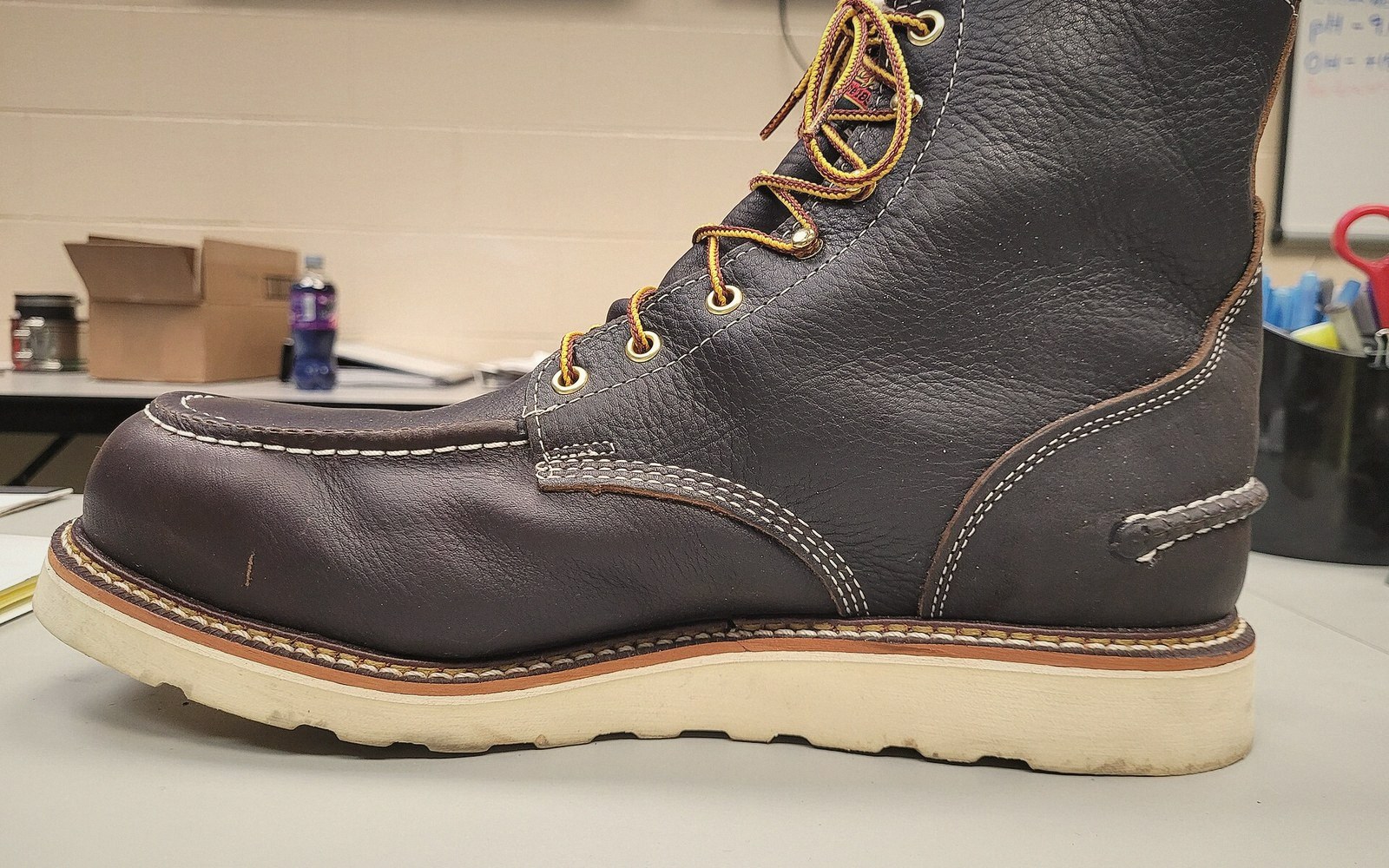
The lasting process begins at the toe. The insole is tacked to the last's bottom surface, and the upper — already stiffened at the toe box and heel with counters — is dampened slightly to make the leather temporarily compliant. At the toe, the operative draws the leather over the last's front and pulls it downward onto the insole margin using lasting pincers, gripping close to the edge and working in small increments around the curve. The tension must be even; any gathering or slack will read as a crease in the finished shoe. Once the toe is set, the sides are pulled and held with tacks or staples, and finally the seat — the heel — is pulled firm and tacked fast. At each stage the operative is working against the leather's resistance and the geometry of the last simultaneously.
Machine lasting, which handles most of the volume in large factories, divides this operation into three dedicated machines — toe laster, side laster and seat laster — each applying pneumatic pull to its section of the upper and driving in wire staples or hot-melt adhesive in a single timed cycle. Hand lasting at the toe still survives in bespoke work and at the upper end of welted production, where the operative's eye for even tension is considered irreplaceable. The distinction is not sentimental; machine lasting leaves tell-tale marks inside the toe that are absent in handwork.
Key stages in sequence
05 Leather · lifted out of the flow- Toe lastingpulling and pinning the upper's front to the insole margin
- Side pullingworking around the waist under even tension
- Seat lastingclosing and securing the heel section
- Conditioningallowing the tensioned upper to set before further work
- Welt seamingsewing the lasted margin to the welt strip
After lasting, the lasted assembly sits for a period before anything further is done to it. The leather, pulled under tension and dried in that condition, must be allowed to set to the shape of the last — a stage sometimes called conditioning or setting. Rush it, and the upper will try to recover its original flat state when the last is pulled out. The duration varies with leather type and thickness; calf takes less time to set than a stiff box calf or cordovan.
In the Goodyear welt construction still practised in Northampton, the lasted margin is then sewn to a strip of welt leather, which provides the platform to which the outsole is later stitched. The lasting operation has to be accurate enough that this seam can run true all the way around the shoe. If the margin is uneven — pulled tighter at one point than another — the welt line will drift, and the finished shoe will look lopsided even if it is not.
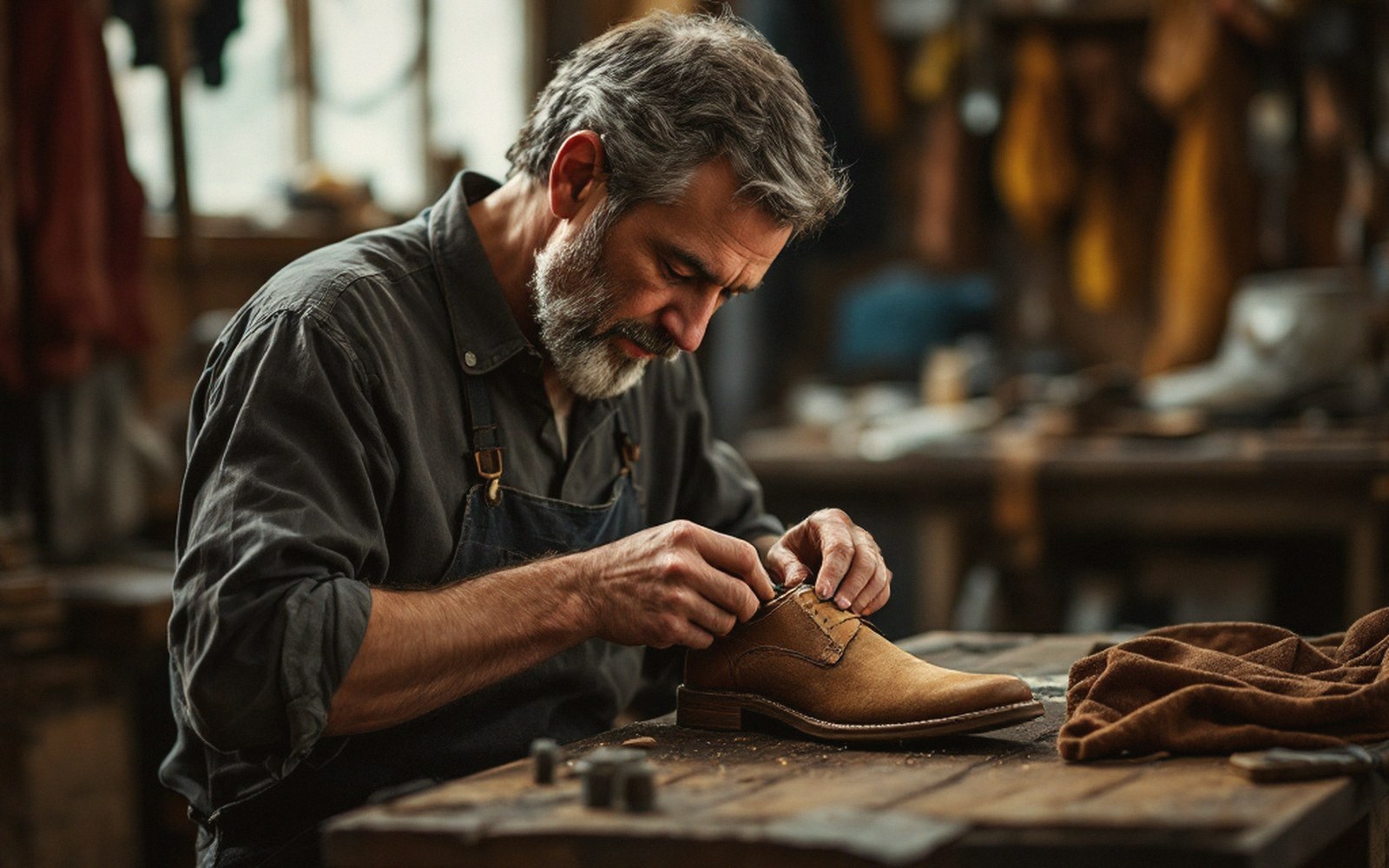
Once the outsole is attached and the shoe is finished, the last is removed, often by hinging the back section forward so it can be withdrawn without destroying the heel. Soon afterwards it is back on the rack, ready to shape the next pair. Its contribution is invisible. The shape it gave the upper is the shoe itself, and it remains there long after the last is gone.