01 Cloth Process 02
The Orb mark
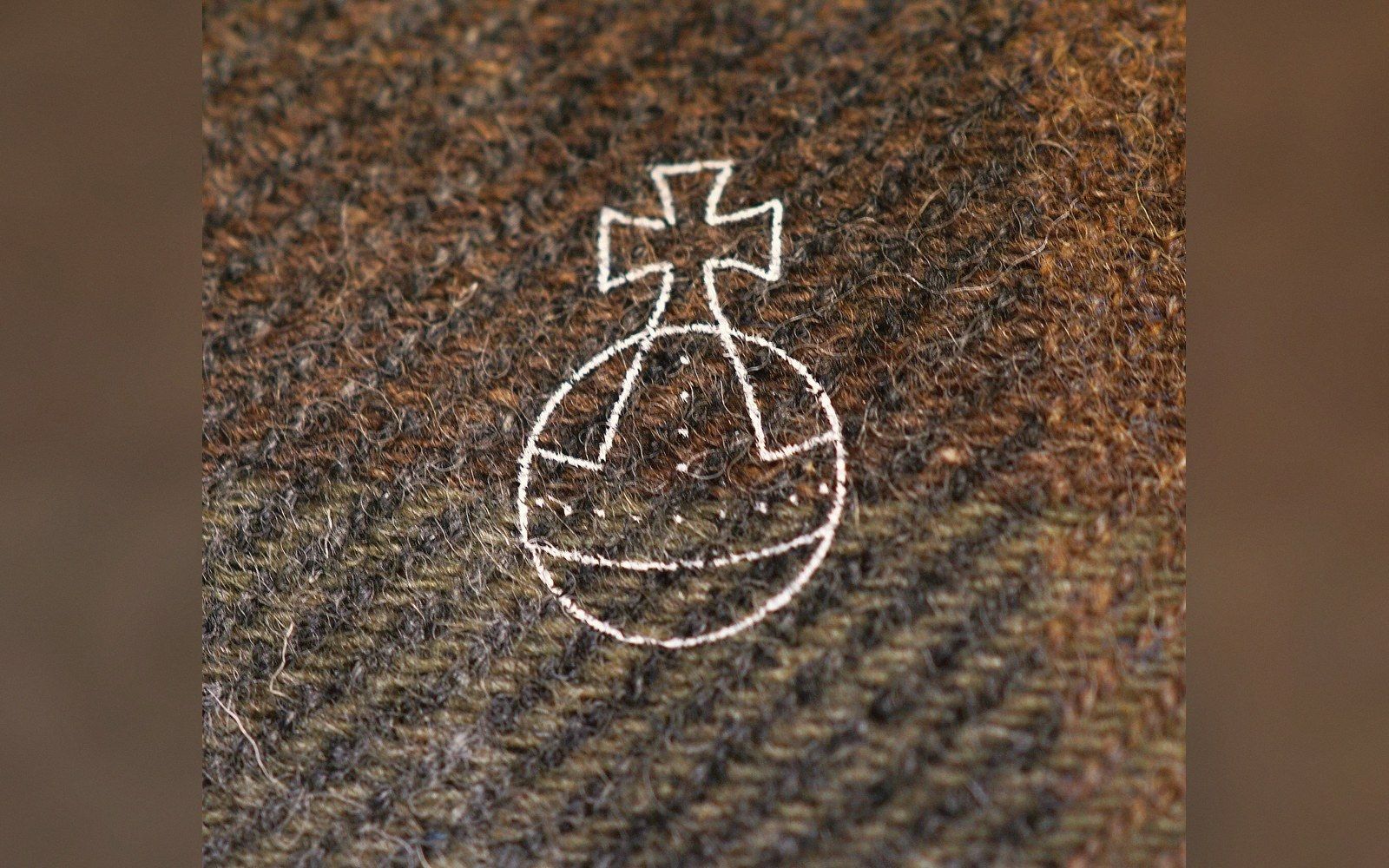
A statutory mark, applied by an inspector, on cloth that has been checked.
What the mark means
A small globe, surmounted by a cross, stamped on the selvedge of a cloth: that is the Orb mark, and its presence is a legal guarantee. The cloth beneath it was hand-woven on a pedal loom, by islanders living on the Outer Hebrides — on Lewis, Harris, Uist or Barra — from pure virgin wool that was dyed and spun in the islands before the shuttle moved. No other cloth in British manufacture carries a protection quite like it. The Orb is not merely a certification mark run by a trade body acting in good faith; it is enforceable under the Harris Tweed Act 1993 ↗, which defines the cloth in statute and gives the Harris Tweed Authority the power to prosecute anyone who misuses the name.
The Authority itself — based in Stornoway, on the Isle of Lewis — is the body Parliament charged with protecting and promoting the cloth. Its inspectors are its own employees, independent of every mill and every weaver. That independence is the point. When a length of Harris Tweed comes off a weaver's loom and is returned to the mill for finishing — washing, teasing, pressing — it passes to an inspector who has played no part in making it. The inspector examines the cloth against the Act's requirements, and only if those are met does the Orb go on.
What the inspector checks
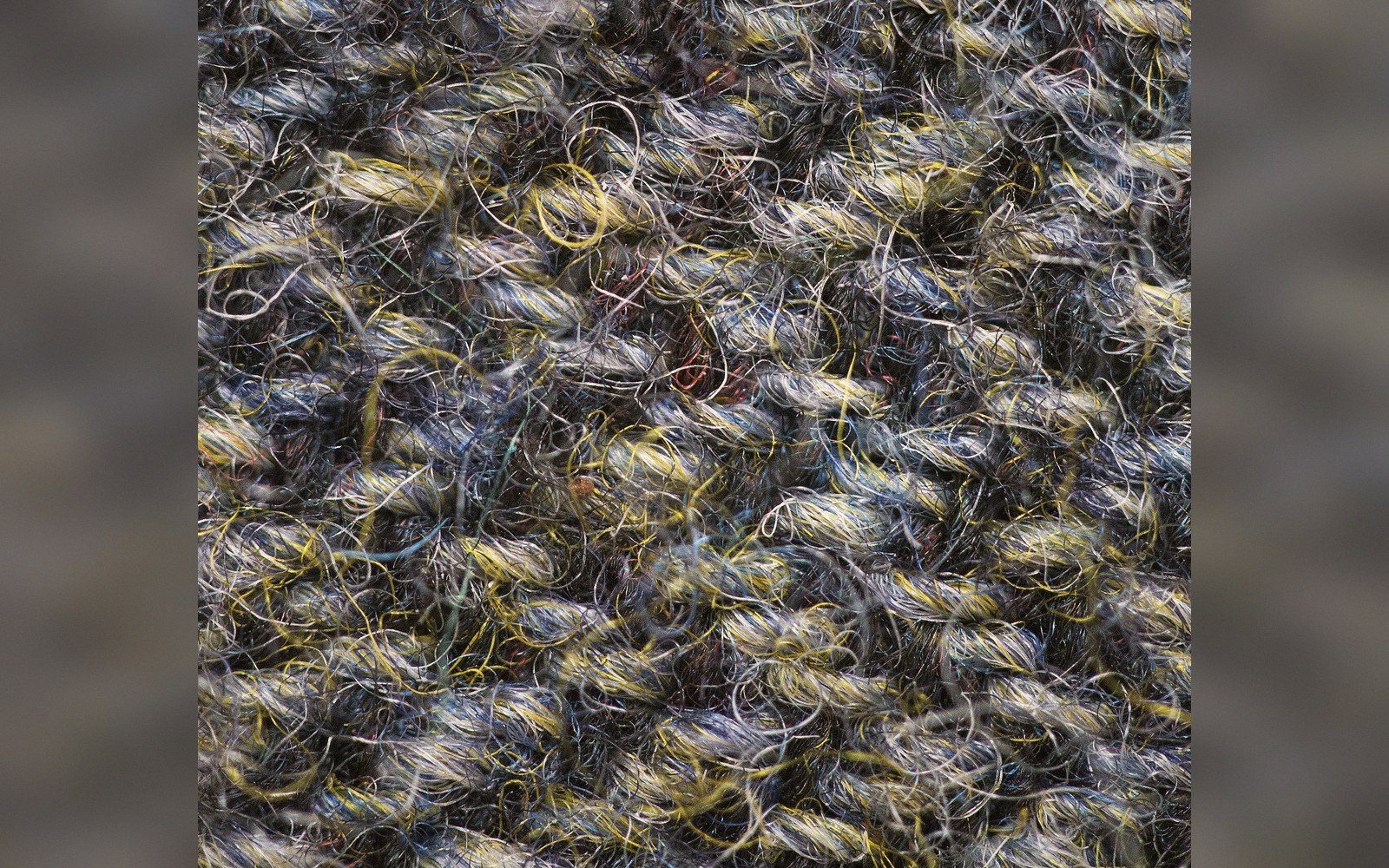
The inspection is physical and methodical. The inspector moves along the full length of the web, checking that the hand-woven structure is intact — that no section has been mechanically woven or substituted — and that the cloth is free of defects that would disqualify it. Density, weight per linear metre and handle all fall within the assessment. The wool must be pure virgin, not recycled or blended with synthetics.
The Orb stamp itself is applied to the selvedge at regular intervals using an Authority-controlled process, so a buyer anywhere in the world can see, on the cloth itself, that the inspection happened. Garment makers cutting the cloth remove the selvedge, but wholesale buyers and tailors sourcing by the metre look for the mark before they cut. It functions less like a quality grade — good, better, best — and more like a denomination on a banknote: the mark either is there or it is not, and if it is not there, the cloth is not Harris Tweed in law, whatever anyone calls it.
Key facts
01 Cloth · lifted out of the flow| Legal basis | Harris Tweed Act 1993, primary legislation of the UK Parliament |
| Administering body | Harris Tweed Authority, Stornoway, Isle of Lewis |
| What the mark requires | hand-woven on a pedal loom, by Outer Hebrides islanders, from pure virgin wool dyed and spun in the islands |
| Inspector status | employed by the Authority, independent of mills and weavers |
| Inspection point | after finishing (washing, teasing, pressing), before despatch |
The history behind the statute
The mark predates the Act by decades. The Orb was registered as a certification trade mark in the early twentieth century, administered through what eventually became the Harris Tweed Association. By mid-century the cloth's commercial success had brought imitators, and disputes over what could legitimately carry the name had become damaging. The 1993 Act resolved the ambiguity permanently, elevating the certification from trade mark practice — vulnerable to challenge and to changes in trade mark law — to primary legislation.
The mills that produce Harris Tweed today are few and concentrated in Stornoway and the surrounding area. The three largest — Carloway Mill, Harris Tweed Hebrides and Kenneth MacKenzie Ltd — run the only warp-dressing and spinning operations that can supply yarn meeting the Act's specification. The weavers who take that yarn are self-employed, working in domestic sheds on looms they own or lease, which is why the cloth carries its domestic character even at industrial volumes. The inspector crosses between those two worlds — the mill and the shed — belonging to neither.
The only textile label in the UK backed by an Act of Parliament — and the inspector who applies it never works for the mill.
What the mark ultimately guarantees is not just origin but method. Many geographic indications protect where something comes from; the Orb protects where and how. The hand on the pedal, the loom in the island shed, the wool from the fleece: the Act names all of them, and the inspector confirms them, one length at a time. Any bolt of cloth leaving the Outer Hebrides under the Orb has been individually examined. That is unusual anywhere in textiles, and in British manufacture it is unique ↗.