01 Cloth Process 03
Dyeing in the wool
Colour mixed at fibre stage rather than after weaving gives the flecked depth.
The order matters
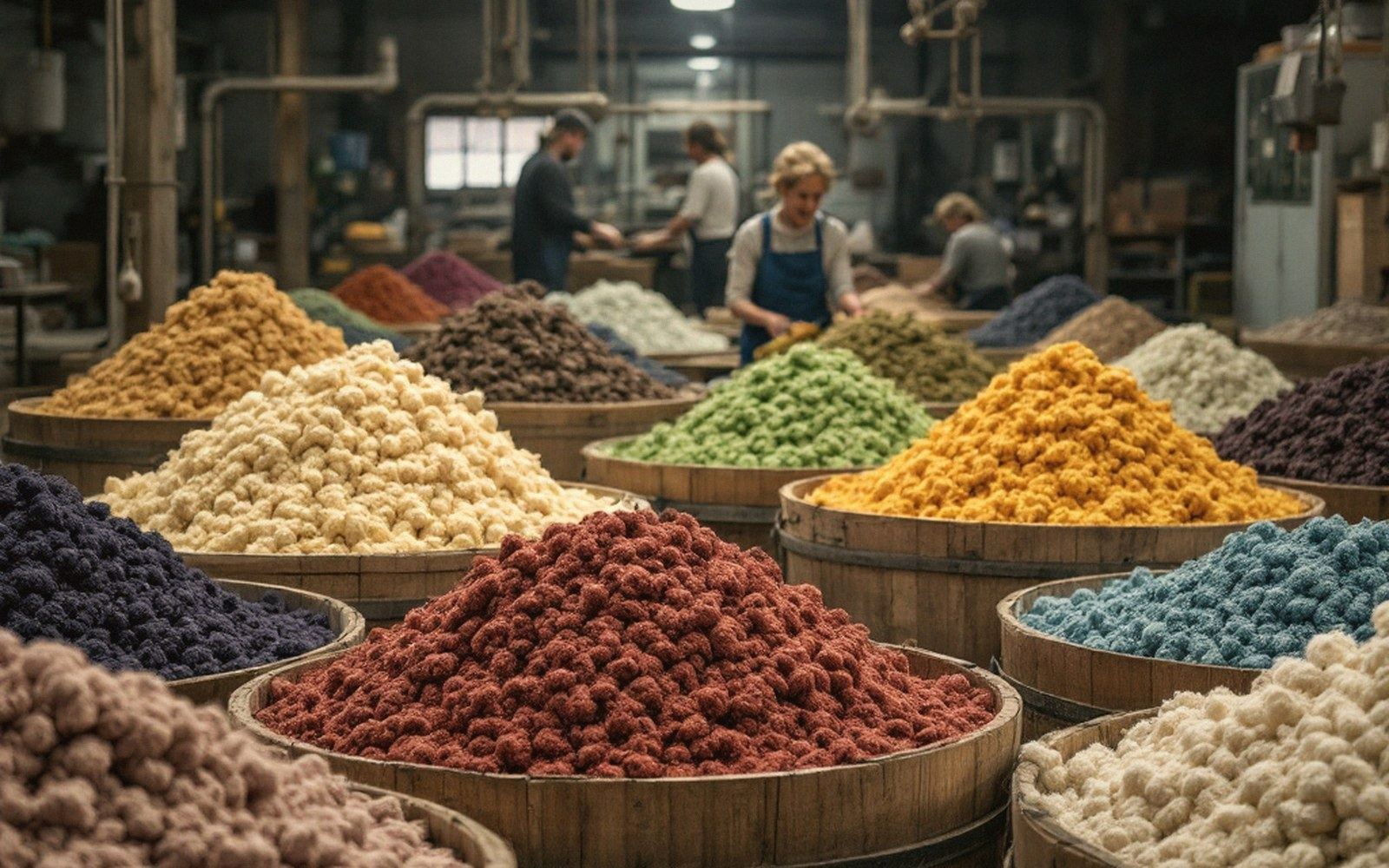
Most industrial fabric is dyed as a finished piece: the cloth is woven grey, then immersed in a vat. It is quick, it is controllable, and it produces a flat, uniform result. Dye the fibre first — "in the wool", as the trade puts it — and the colour sits at an entirely different stage of the structure. Every individual fibre takes the dye in its own way, and the subsequent carding, spinning and weaving introduce micro-variation that no piece-dyed fabric can replicate. The result is depth rather than surface colour: look at a length of Harris Tweed closely and you see not one shade but a constellation of adjacent tones that shift as the light changes.
The process begins with the raw fleece, opened and scoured to remove lanolin and vegetable matter, then dried before the dyebath. Traditional dyers — and those producing cloth under the Harris Tweed Authority's strict specification — work with pre-mordanted wool, typically fixed with alum or chrome, to bind the dye molecule to the keratin of the fibre. Without a mordant, colour washes out; with one correctly applied, it becomes part of the fibre's chemistry and resists both light and water over decades of wear.
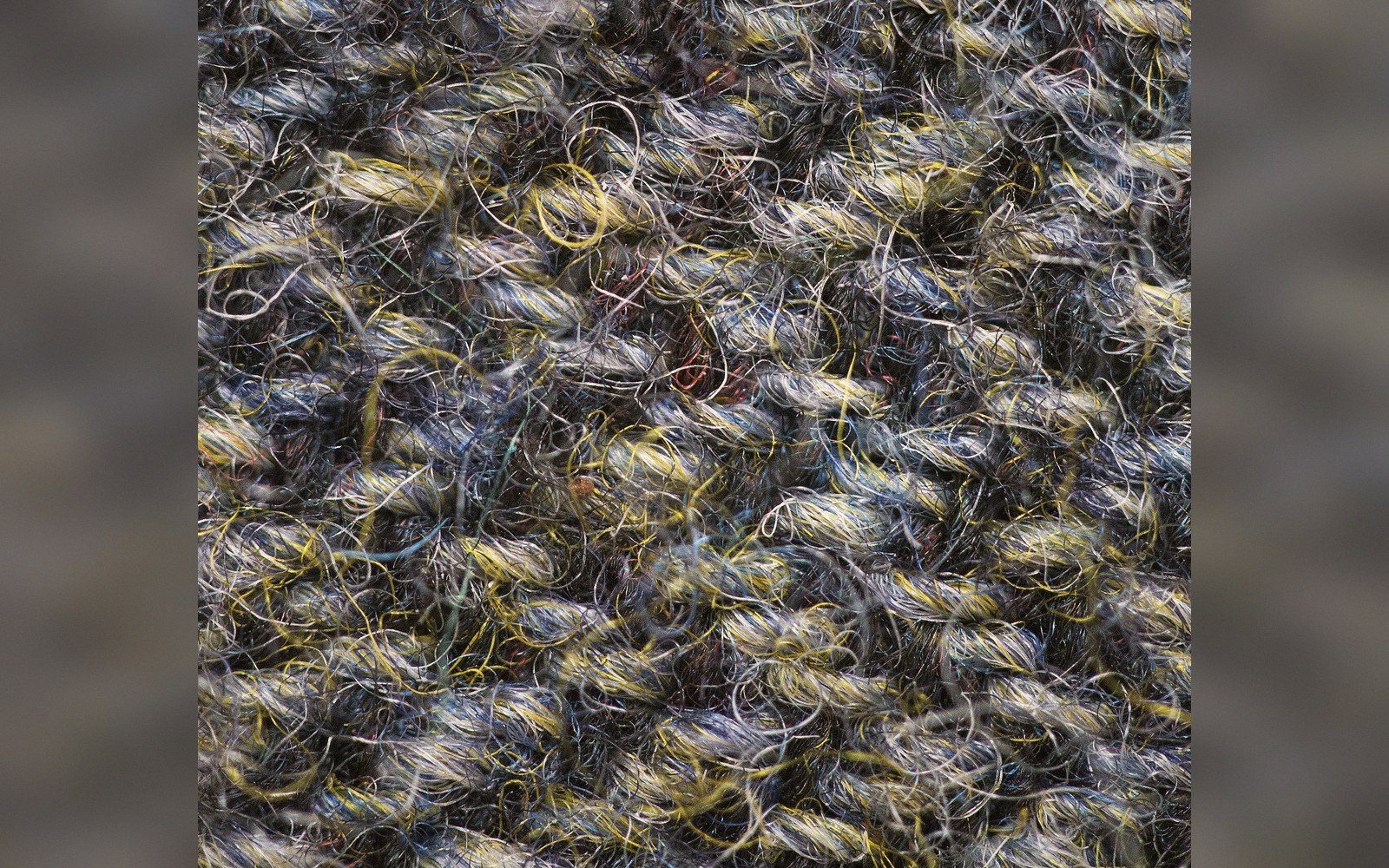
Colour blending in this system happens physically rather than chemically. A dyer targeting a particular heather grey will make several differently coloured batches of loose fibre, then blend them on the carding machine, where steel-toothed rollers draw the fibres into alignment and intermingle the separate colours into a unified roving — a soft rope of prepared fibre ready for the spinning frame. The eye reads this mixture as a single tone at distance, but the component colours remain distinct to close inspection. Adjust the proportions and you shift the blend; no two mill runs are ever quite identical. It is, in effect, a painter's process applied to loose fibre.
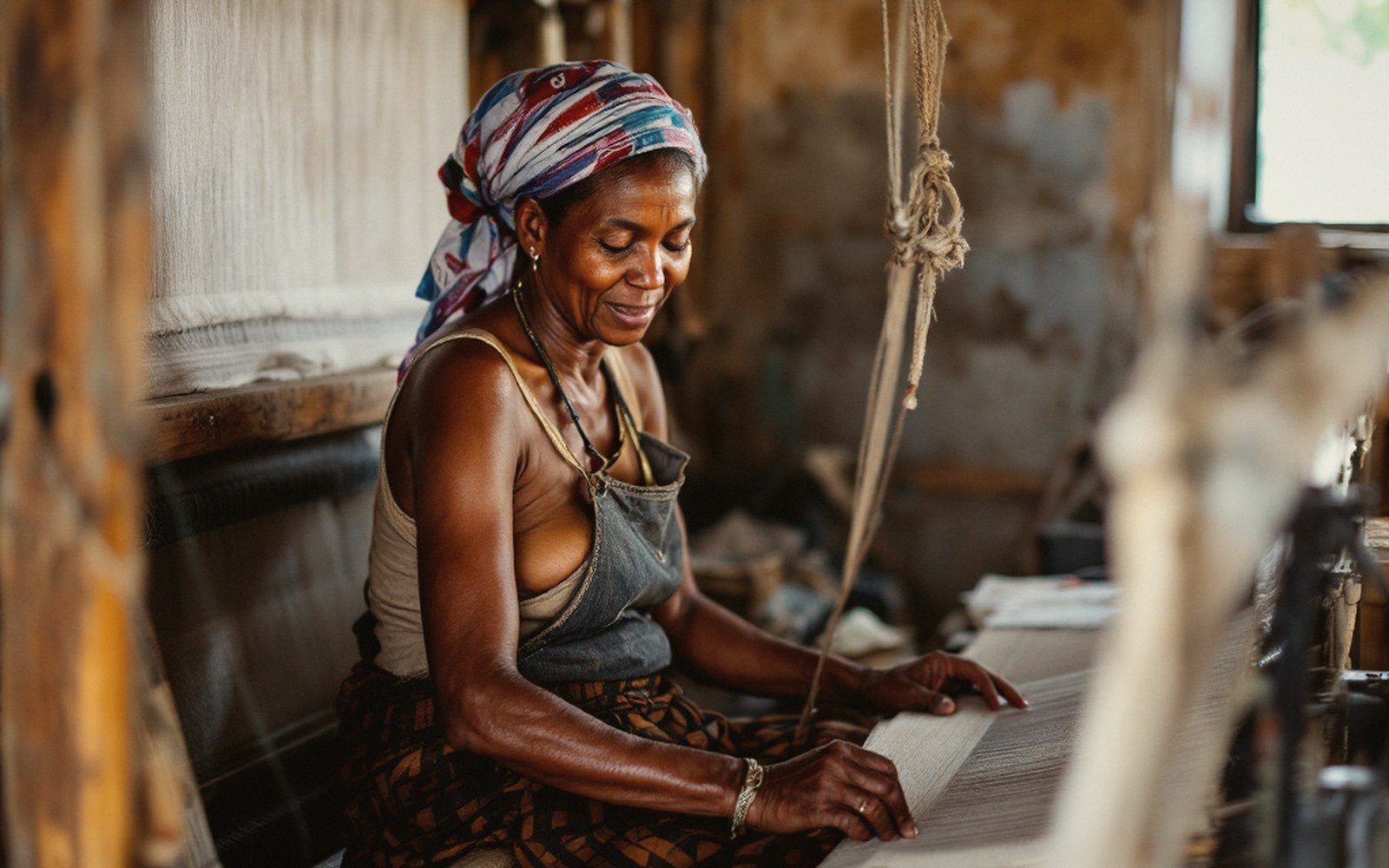
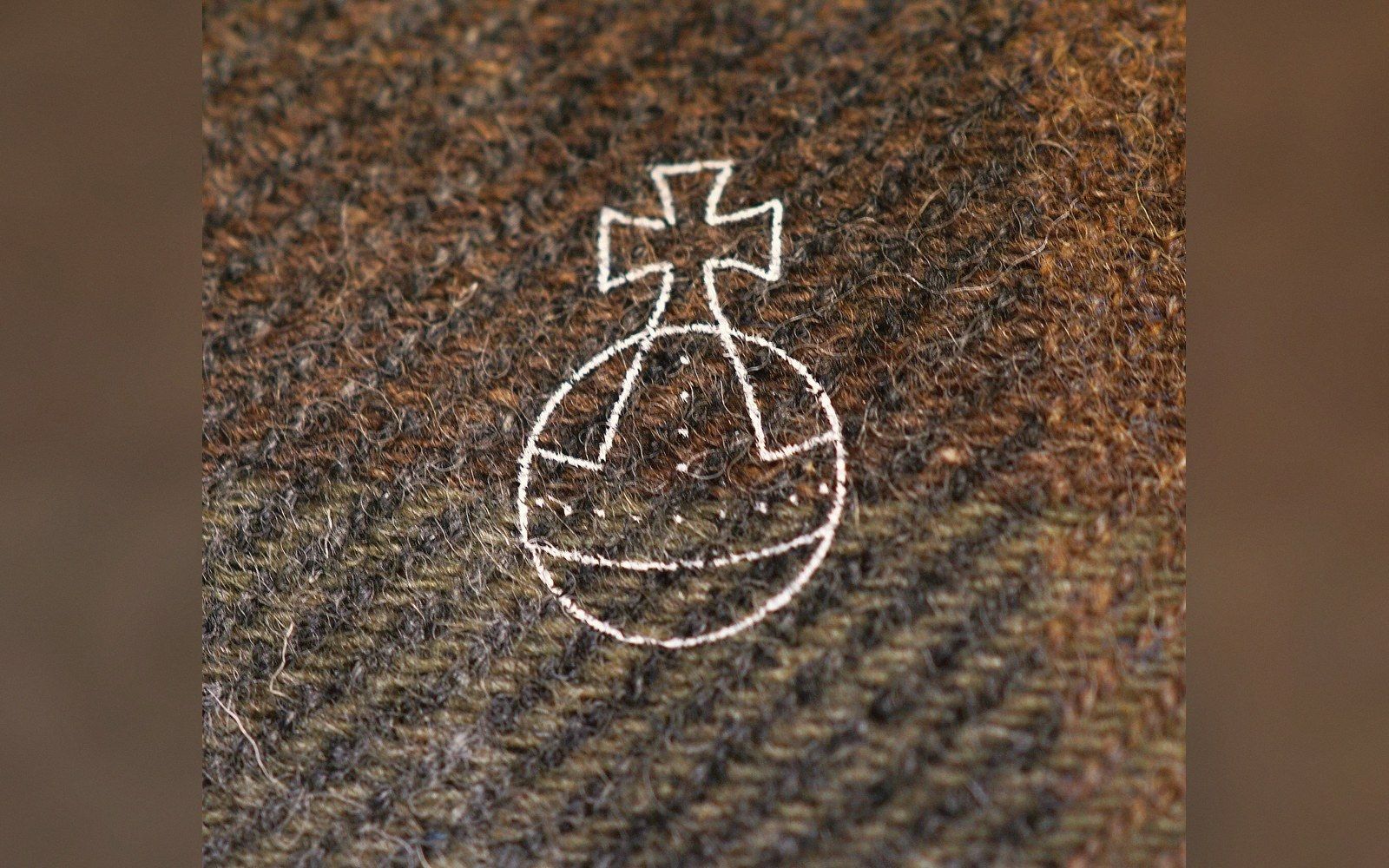
The Outer Hebrides is the place where the technique survives at its most demanding specification. The Harris Tweed Authority requires that all virgin wool be dyed and blended on the islands of Lewis, Harris, Uist and Barra before it is spun and hand-woven by island weavers. That geographic lock means the entire colour process stays close to the loom, and the characteristic flecked surface of the cloth — its defining visual quality — is a direct consequence of the dye-in-the-wool method. Nowhere in the production chain is a shortcut available that would not immediately show in the cloth.
How the blend is built
01 Cloth · lifted out of the flow| Raw fleece | scoured and dried before any dye is applied |
| Mordanting | alum or chrome fixes the dye molecule to the keratin fibre |
| Dyebath | each colour batch dyed separately as loose fibre |
| Carding | differently coloured fibres blended mechanically on toothed rollers |
| Roving | the carded output, ready for spinning |
Colour fixed at the fibre stage — before spinning, before weaving — gives cloth its depth, its fleck, and its staying power.