04 Alloy Process 01
Single-Crystal Blades
Turbine blades grown as one crystal run in gas hotter than the alloy's own melting point, surviving because they are film-cooled through laser-drilled holes.
How a turbine blade survives the impossible
A jet engine's high-pressure turbine runs at gas temperatures that exceed the melting point of the metal it spins through. That is not a paradox to be explained away — it is the working condition, accepted and engineered around with a precision that has few parallels in British manufacture. The blade at the heart of this system is grown, not cast in any ordinary sense, as a single crystal of nickel superalloy: one continuous lattice, no grain boundaries, no planes of weakness for heat and stress to find and follow.
The story of how Britain arrived here runs through Derby and the jet engine work that Rolls-Royce has pursued since the 1940s. By the time single-crystal technology entered production in the 1980s, it was the culmination of three generations of alloy and casting development — from polycrystalline blades, through directionally solidified blades in which grains were aligned but not unified, to the single-crystal form now standard in high-pressure turbines. Each step reduced the number of grain boundaries; the single crystal eliminates them entirely, and with them the principal mechanism by which a metal creeps, cracks and fails under sustained high-temperature load.
Growing the crystal
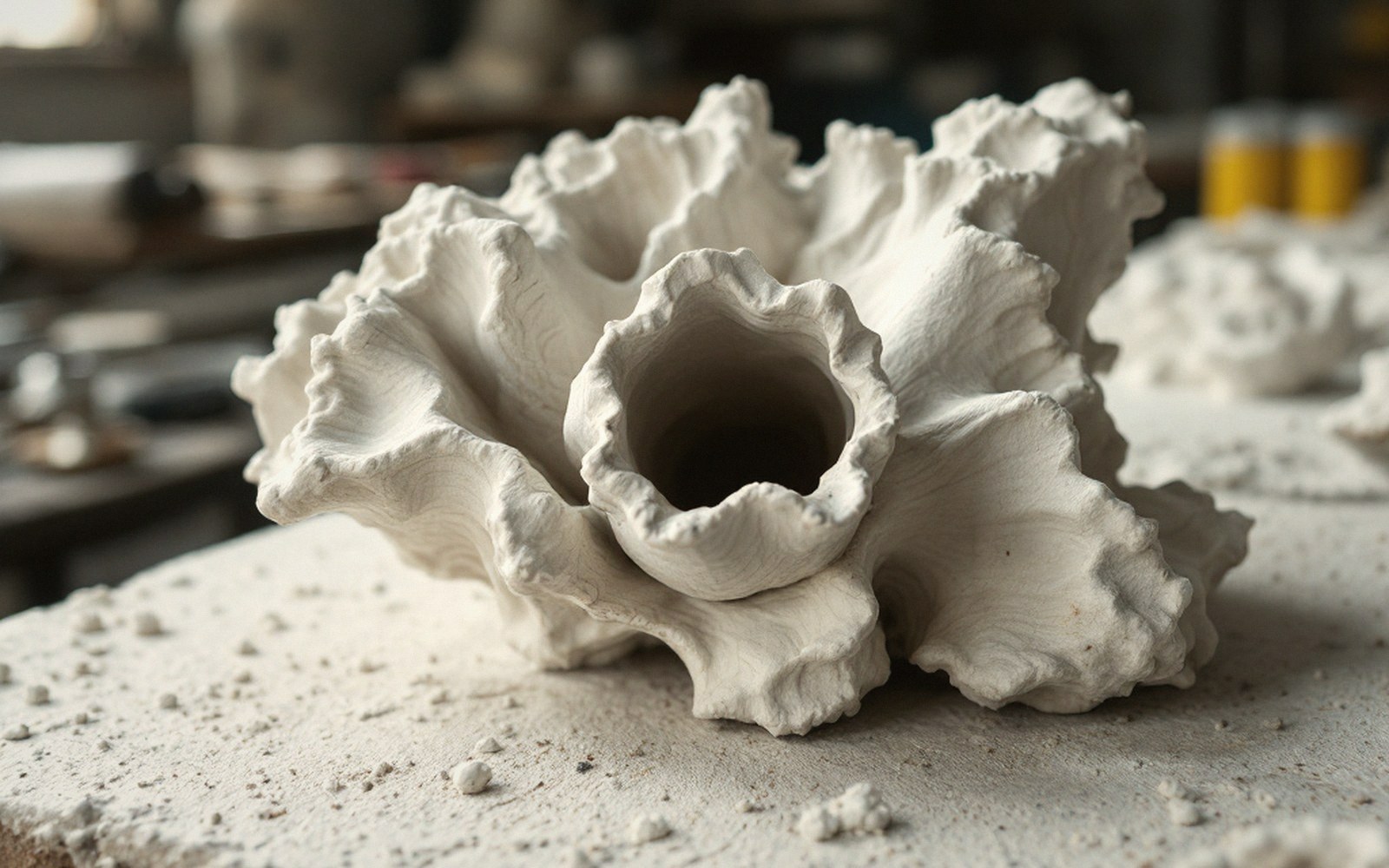
The process begins with investment casting: a wax pattern of the finished blade, complete with its intricate internal cooling geometry, is built up in a ceramic shell. The wax is melted out, the shell fired, and the resulting mould is filled with molten nickel superalloy — an alloy whose composition runs to a dozen or more elements, including rhenium, ruthenium, aluminium and tantalum, each present in carefully controlled proportions to optimise strength, oxidation resistance and thermal stability at extremes that mild steel would simply not survive.
What distinguishes single-crystal casting from conventional investment casting is what happens during solidification. The mould is withdrawn slowly downward out of a furnace and into a cooled zone, at a rate measured in millimetres per minute. At the base of the mould sits a spiral selector — a helical passage so narrow that only one crystallographic orientation of growing solid can navigate it and emerge to seed the blade above. Every other crystal nucleus is crowded out. The single winner propagates upward through the entire blade as the solidification front advances, until the whole component is one grain, oriented so that its strongest crystallographic axis runs along the length of the blade, precisely where the centrifugal stress is greatest.
The temperature gradient across that solidification front must be maintained with extraordinary consistency. Any fluctuation — a variation in withdrawal speed, a flaw in the ceramic shell, a disturbance in the furnace atmosphere — can introduce a stray grain boundary, which is cause for rejection. Yield rates in single-crystal casting are lower than in conventional foundry work, and the inspection regimes that follow are correspondingly stringent: X-ray diffraction to confirm orientation, fluorescent penetrant testing, and dimensional checking by coordinate-measuring machine against tolerances measured in hundredths of a millimetre.
How it is made — the key steps
04 Alloy · lifted out of the flow- Wax pattern formedincludes internal cooling passage geometry
- 02Ceramic shell built up by investment casting; wax burned out
- 03Molten nickel superalloy poured; mould withdrawn slowly from furnace
- 04Spiral selector at base filters crystal nuclei to one orientation
- 05Single crystal propagates upward as solidification front advances
- 06Post-casting: heat treatment, thermal barrier coating applied
- Laser drillinghundreds of holes, sub-millimetre diameter, precisely angled
- 08Inspection: X-ray diffraction (orientation), penetrant testing, CMM dimensional check
Why holes, not more metal
A blade grown at such cost and precision still cannot survive the operating environment unaided. The gas temperature at which a modern high-pressure turbine operates — around 1,700°C in a civil aero-engine, and higher in some military applications — exceeds the incipient melting temperature of the nickel alloy itself by a substantial margin. The single-crystal structure raises the alloy's useful temperature ceiling relative to polycrystalline alternatives, but not by enough to close that gap. The solution is film cooling: a continuous skin of cooler air, bled from the compressor and delivered through a network of internal passages and hundreds of laser-drilled holes in the blade's surface, spreads over the metal and insulates it from the full heat of the gas stream.
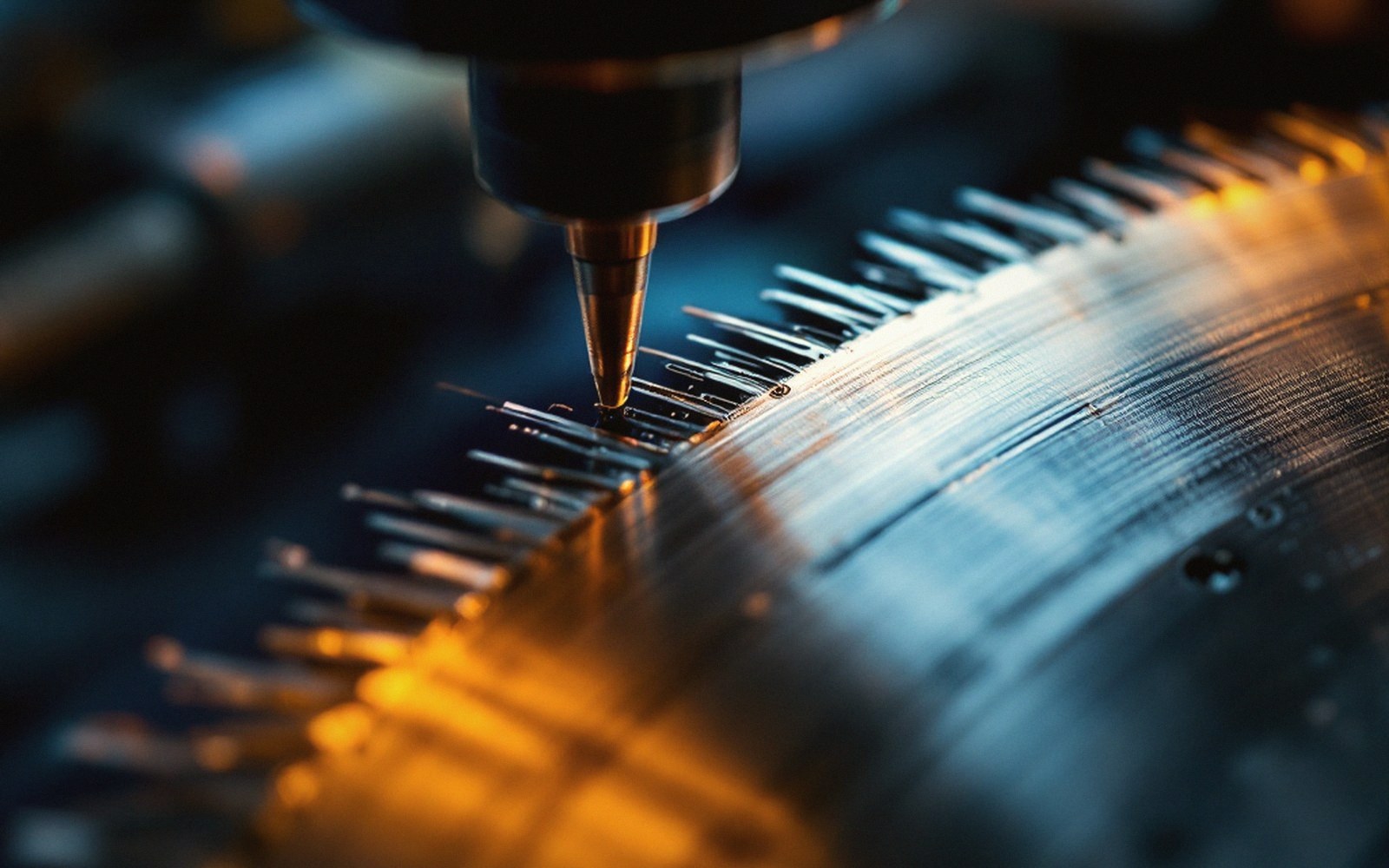
Those internal passages are part of the wax pattern. The holes themselves — typically a fraction of a millimetre in diameter — are cut after casting by shaped laser pulses, positioned with submillimetre precision across the aerofoil, platform and leading edge. The laser must penetrate an outer layer of thermal barrier coating, a ceramic layer deposited by electron-beam physical vapour deposition or plasma spray, without damaging the superalloy beneath. In production, this is automated and repeatable, but the engineering that determined where each hole should sit, how large it should be, and at what angle it should be drilled is the product of computational fluid dynamics analysis and decades of rig testing.
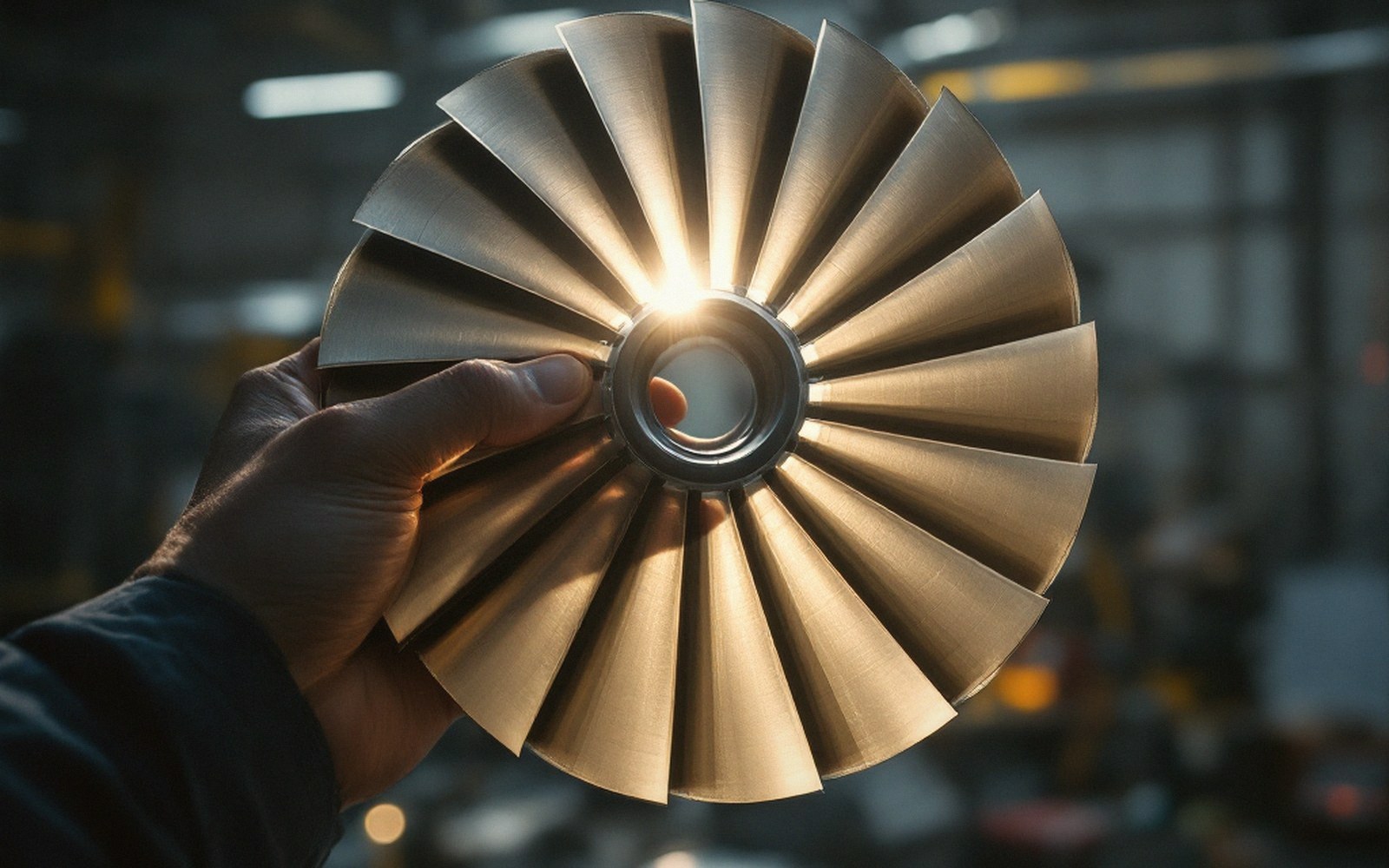
The cooling air itself is expensive — every kilogram bled from the compressor is a kilogram not contributing to thrust — so the design aim is always to do more insulating with less air. That imperative has driven the evolution from simple radial holes to shaped effusion holes, angled to spread the coolant film as widely as possible along the surface, and it continues to drive research into additive-manufactured cooling geometries that are too intricate to be formed in wax and ceramic.
From Derby outward
In Britain, the industrial centre of gravity for this work is Derby, where Rolls-Royce operates its manufacturing and research facilities for aero-engine components. The casting of single-crystal blades is not done in a single building or by a single process team: it involves foundry, heat treatment, coating, laser machining and inspection spread across a supply chain that reaches into the West Midlands and beyond. But the integrated engineering knowledge — the ability to specify an alloy, design a cooling circuit, grow a crystal, coat it and test it — remains concentrated around the engine programmes that have run continuously in Derby since the Merlin and the Avon.
The blades themselves are small objects to carry so much engineering. A high-pressure turbine blade for a civil turbofan is typically shorter than a human hand, weighing a few hundred grams. In service it spins at thousands of revolutions per minute, sustaining centrifugal loads equivalent to many tonnes while bathed in gas that would liquefy it without the cooling film. It is replaced — not repaired — on a schedule determined by accumulated flight cycles, because the cumulative effects of thermal fatigue, oxidation and creep are not fully reversible even in an alloy and geometry this precisely engineered. The blade is, in the end, a consumable: the sophistication of its manufacture is part of what determines how long it takes to consume.