04 Alloy Process 02
Investment casting
A wax pattern, a ceramic shell, and a mould that is destroyed to release one part.
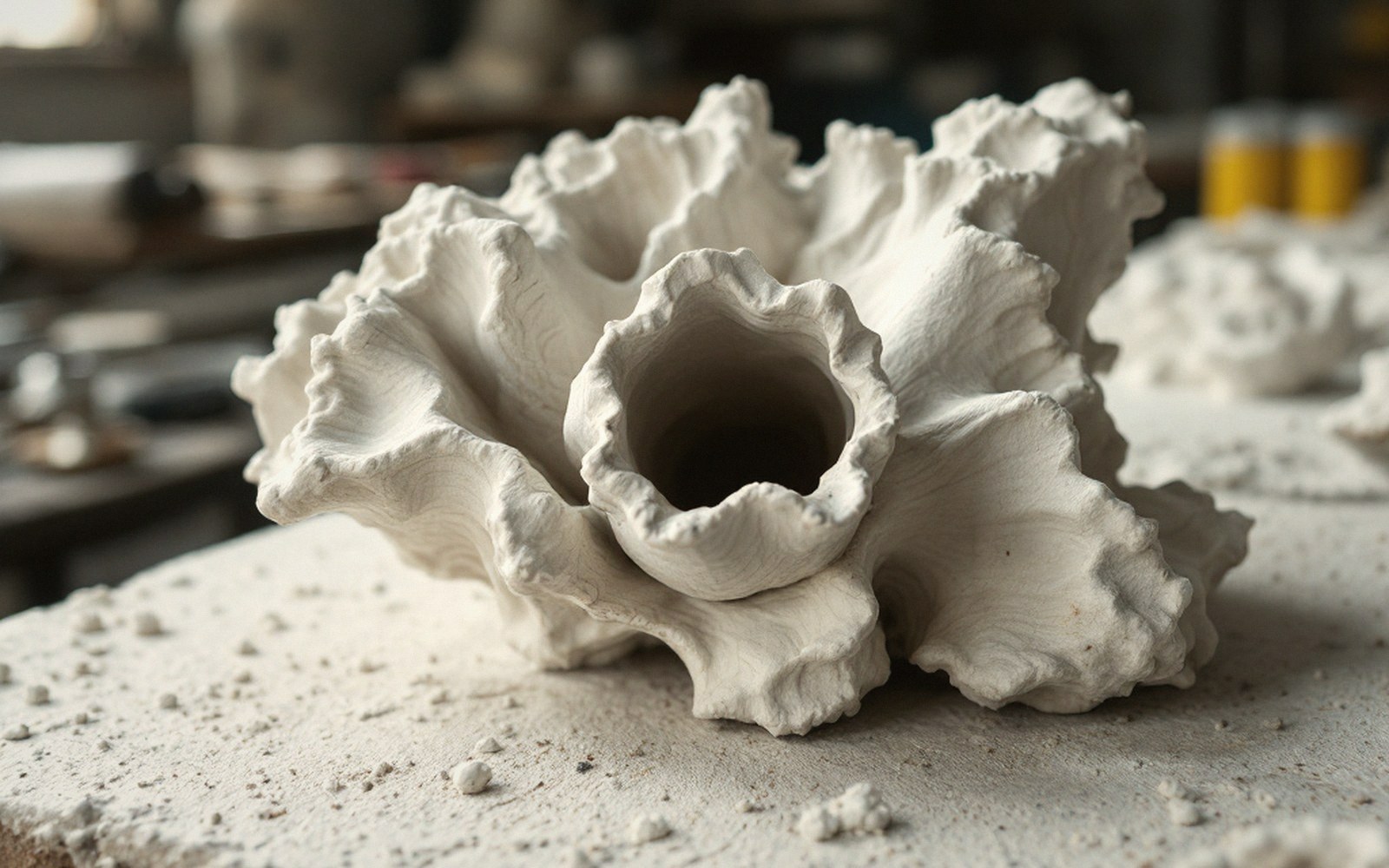
A wax pattern, a ceramic shell, and a mould that is destroyed to release one part
Investment casting works on a principle older than Rome: make a perfect replica in wax, encase it in refractory material, melt the wax out, pour molten metal into the void. The contemporary version of the process — refined through the twentieth century for jet engines, surgical implants and aerospace structures — is considerably more controlled than the ancient bronzesmith's lost-wax method, but the logic is identical. You sacrifice the pattern to release the part.
From wax to shell
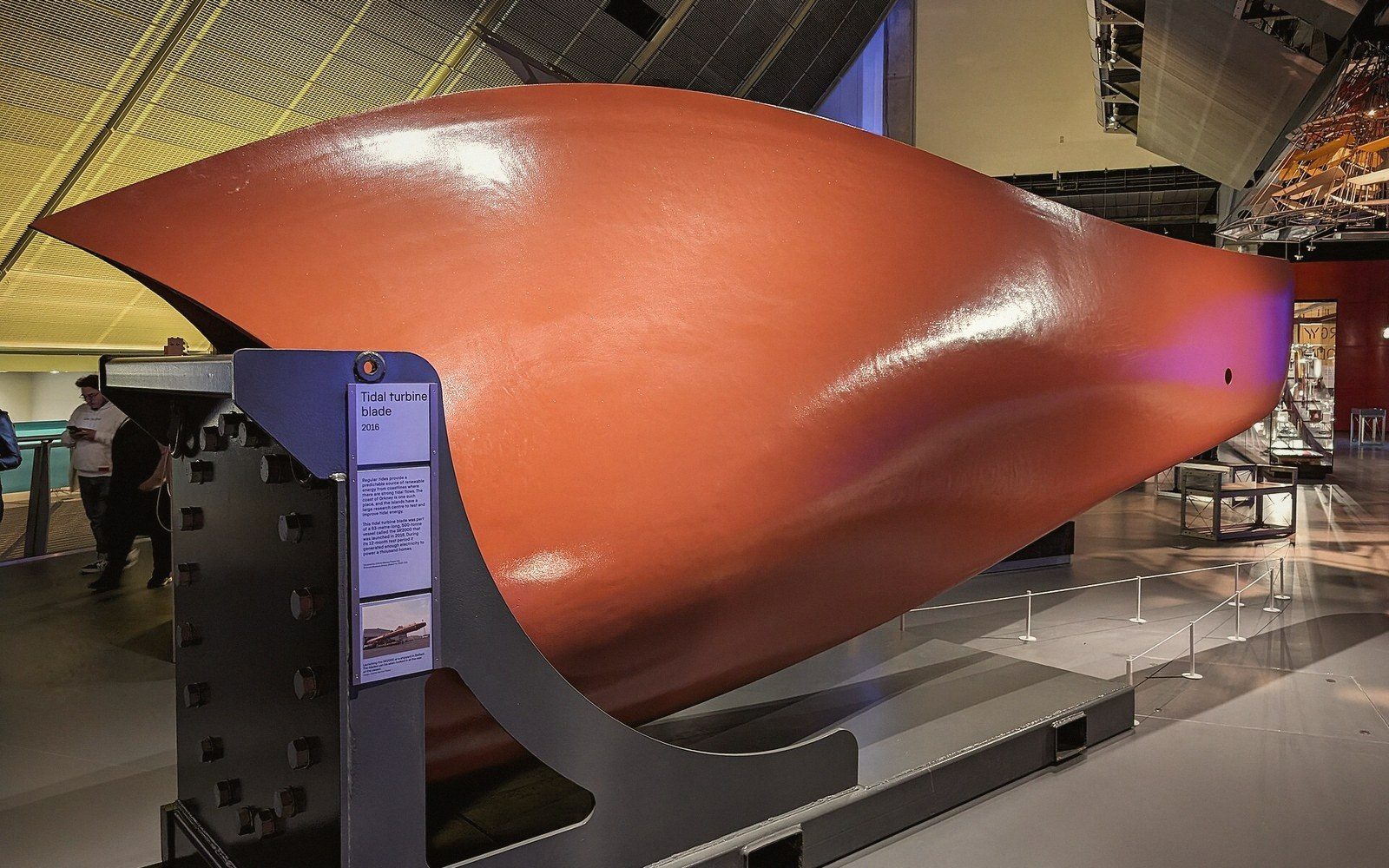
The first stage is the pattern itself. In a production run, wax is injected under pressure into a metal die, producing a replica of the finished component complete with its internal geometry. Multiple wax patterns are typically assembled onto a central wax runner — the sprue ↗ system — to form a tree, several parts cast in a single pour. The wax tree is then dipped repeatedly into a slurry of fine ceramic — typically a silica-based compound — and coated with a refractory stucco of coarser grain. Each layer is allowed to dry before the next is applied. Six to twelve dips are normal; the shell that results is roughly five to ten millimetres thick and hard enough to withstand the violence of a metal pour.
Once the shell is cured, it goes into an autoclave. Steam pressure causes the wax to melt and drain away in minutes — far faster than a furnace would allow, and crucially without thermally shocking the ceramic before it has been fired. The hollow shell is then fired at high temperature, which burns away any wax residue and vitrifies the ceramic, making it rigid and able to bear the metallostatic pressure of molten alloy.
How the shell is built
04 Alloy · lifted out of the flow| Wax pattern | injected into a metal die, or hand-assembled for prototypes |
| Ceramic slurry | typically silica-based; fine grain for first coats, coarser stucco between |
| Dip count | six to twelve coats, each dried before the next |
| Shell thickness | roughly 5–10 mm when complete |
| Autoclave dewax | steam pressure, not oven heat, removes wax fast without cracking the green shell |
| Shell firing | vitrifies the ceramic; burn-off of residual wax follows |
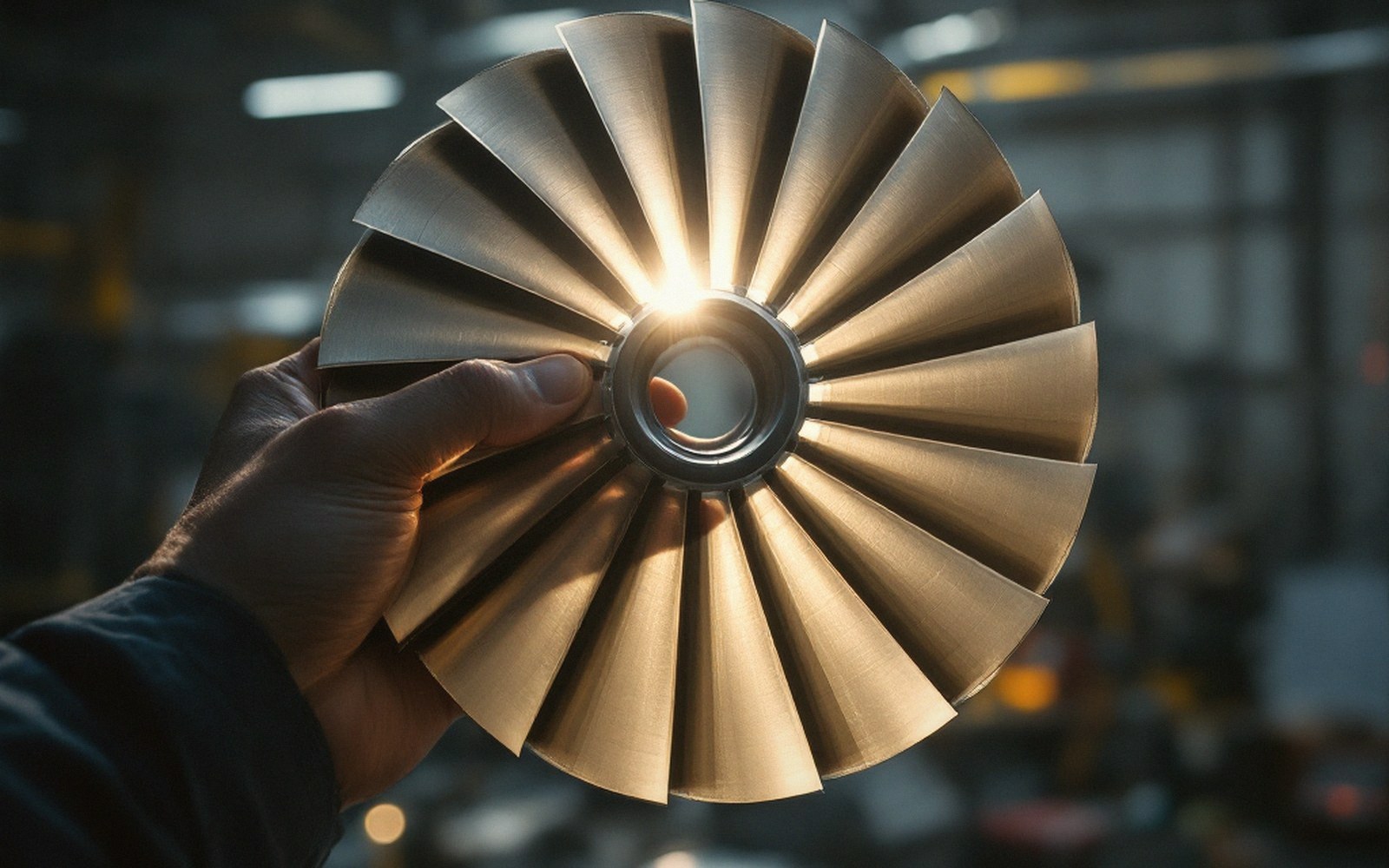
The pour follows immediately, while the shell is still hot. Preheating the mould reduces thermal shock, prevents premature solidification in thin sections, and allows the metal to reach every corner of a complex cavity. For standard industrial alloys — stainless steels, tool steels, cobalt and nickel-based superalloys — this is a relatively brief process. For the directionally solidified and single-crystal blades used in turbine engines, the pour and the controlled withdrawal from the furnace must be timed precisely to propagate a grain structure that runs the full length of the blade without interruption.
Where the process earns its place
After the metal has solidified, the ceramic shell is broken away — hammered, vibrated and in some cases chemically leached — leaving a near-net-shape casting that requires minimal machining. That closeness to final geometry is the process's principal economic justification. It allows the use of alloys that are too hard to machine economically in bulk, and it can reproduce internal passages — cooling channels, thread forms, thin walls — that no other primary process can match. Losses in a post-cast finishing operation are a fraction of what a machined-from-solid approach would remove.
In Britain, the process is central to the manufacture of turbine components. Rolls-Royce, with major facilities in Derby, uses investment casting for the hot-section components of its civil and military aero-engines — the blades and vanes that operate at temperatures exceeding the alloy's own incipient-melt point, sustained only by film cooling through cast-in passages. The dimensional precision required there is not achievable by any other primary forming route.
Outside aerospace, the same process serves medical device manufacture, pump and valve components, and the arms industry, wherever a complex geometry must be held in an alloy too refractory or too hard to stamp, forge or machine readily from billet. The tooling cost is significant — a production die is not cheap — but the per-part cost falls quickly over a long run, and the ceramic shell costs almost nothing relative to the metal it forms.
The mould exists for one casting. Everything that is precise about the part was already there in the wax.