06 Glass Process 02
Hand Blowing
A gather on the end of an iron, breath, and a very short working window.
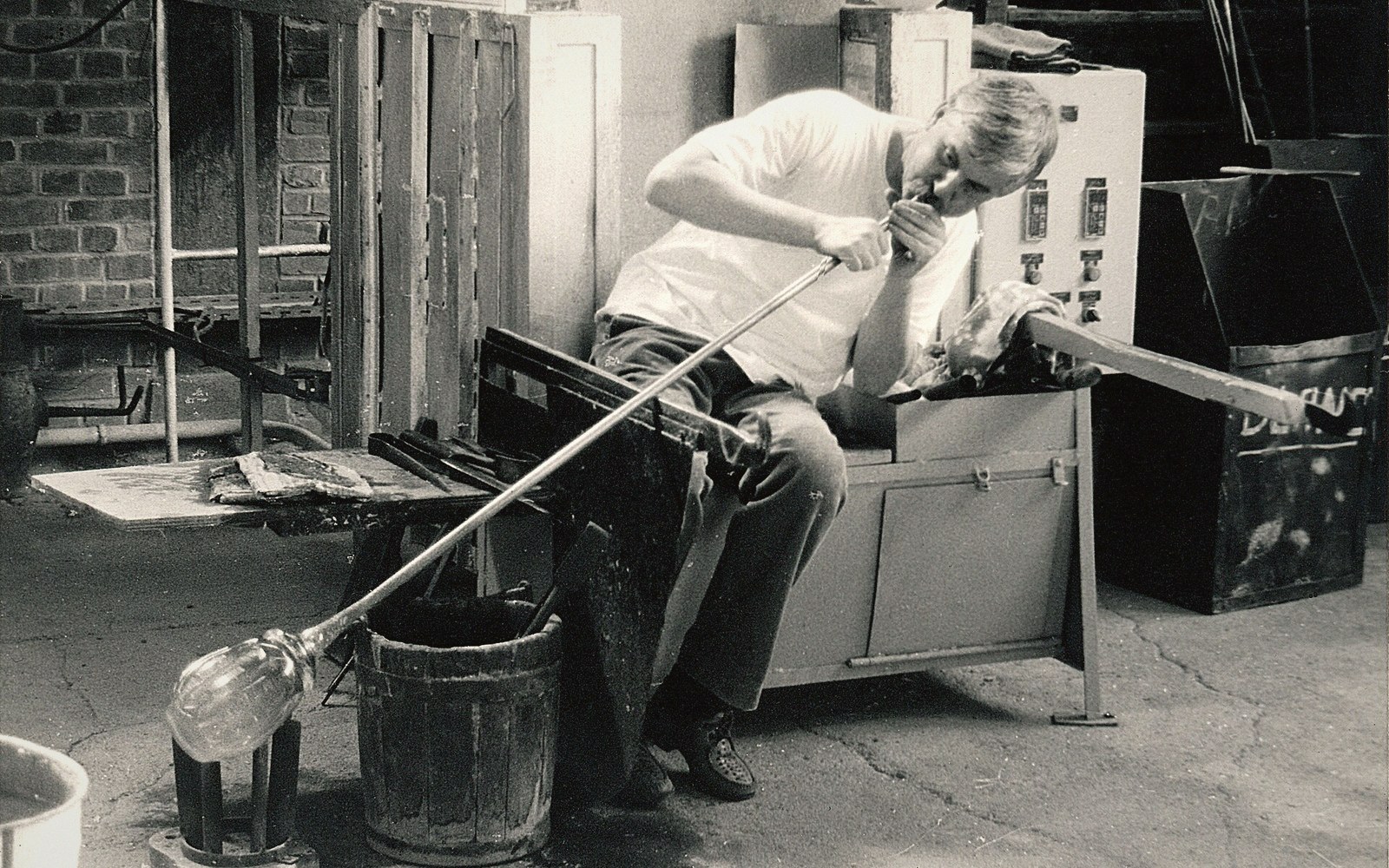
The gather and the bubble
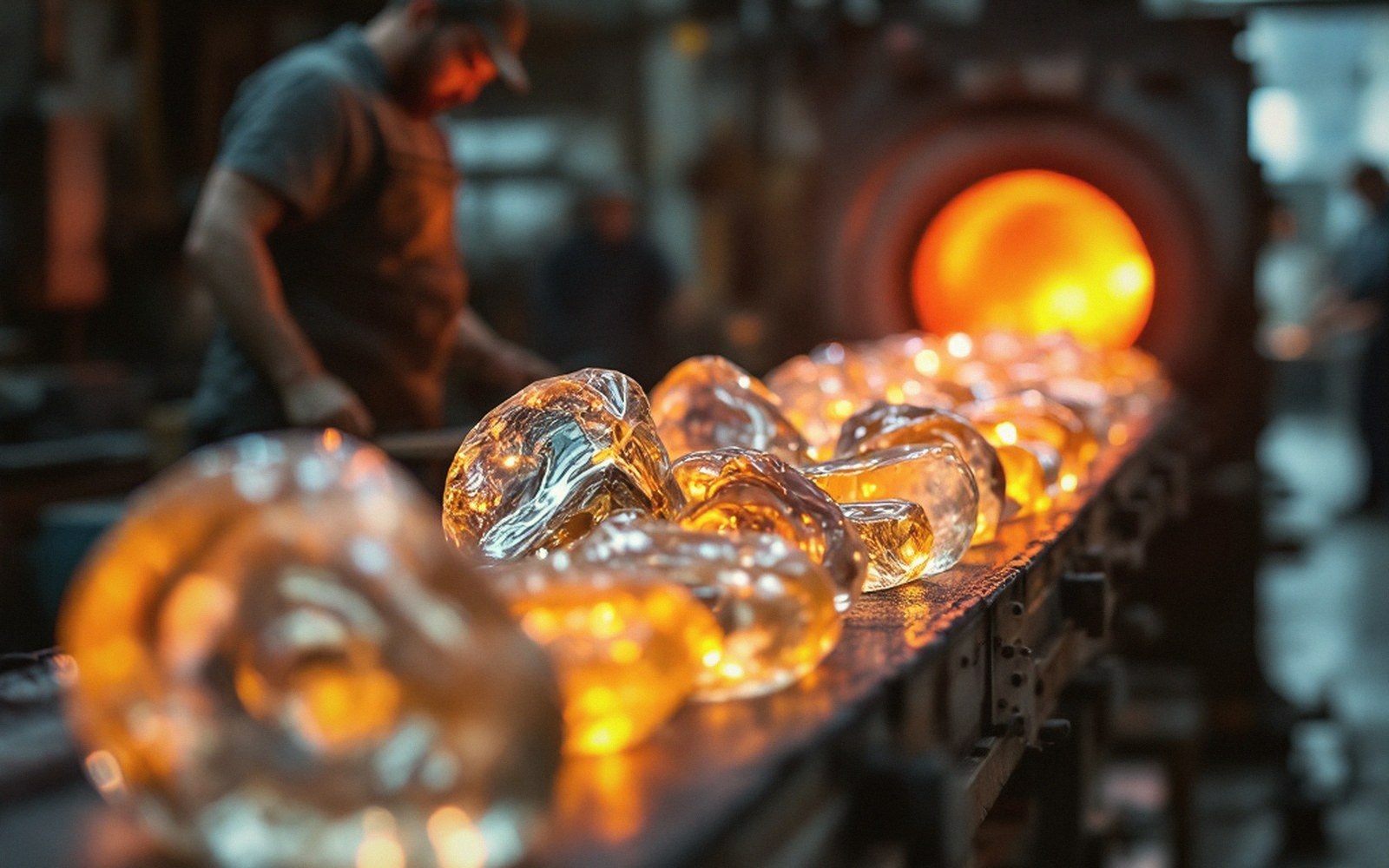
Glass at working temperature — somewhere between 1,000 and 1,200 °C depending on the batch — moves like thick honey and glows a bright orange-yellow. The blower begins by dipping a hollow iron rod, known as the blowpipe, into the furnace pot and rotating it steadily to collect a gather: a mass of molten glass that clings by viscosity rather than surface tension alone. The rotation never stops. Set the pipe down and the gather sags immediately, pulled by gravity into a teardrop and then a drip.
With the gather marvered — rolled on a flat iron or steel surface to centre it and chill the outer skin slightly — the blower seals one end of the pipe with a thumb and blows a single, controlled breath into the other. The air expands inside the cooling skin, and a bubble forms. This is the blank, sometimes called the paraison, and almost everything that follows is an elaboration of it. Too hard a breath and the walls blow unevenly thin; too gentle and the skin stiffens before the bubble is properly established. The skill is partly in the breath but mostly in reading the glow: a bright orange mass is workable, a cherry red is stiffening, and anything darker needs to go back to the glory hole — the reheating furnace — before it can be shaped further.
Tools, reheats and shape
The blower's free hand holds a set of tools that have changed very little in centuries: jacks (spring tongs that can neck or open the form), wooden blocks soaked in water that shape the underside of a gather without scorching, and shears for cutting. The pipe is rotated throughout on the arms of the chair — a low bench whose flat arms act as rails — and the blower rocks gently back and forth to keep the centrifugal force even. A piece of any complexity requires multiple reheats, each one buying another short working window, and the number of reheats is one measure of a piece's ambition.
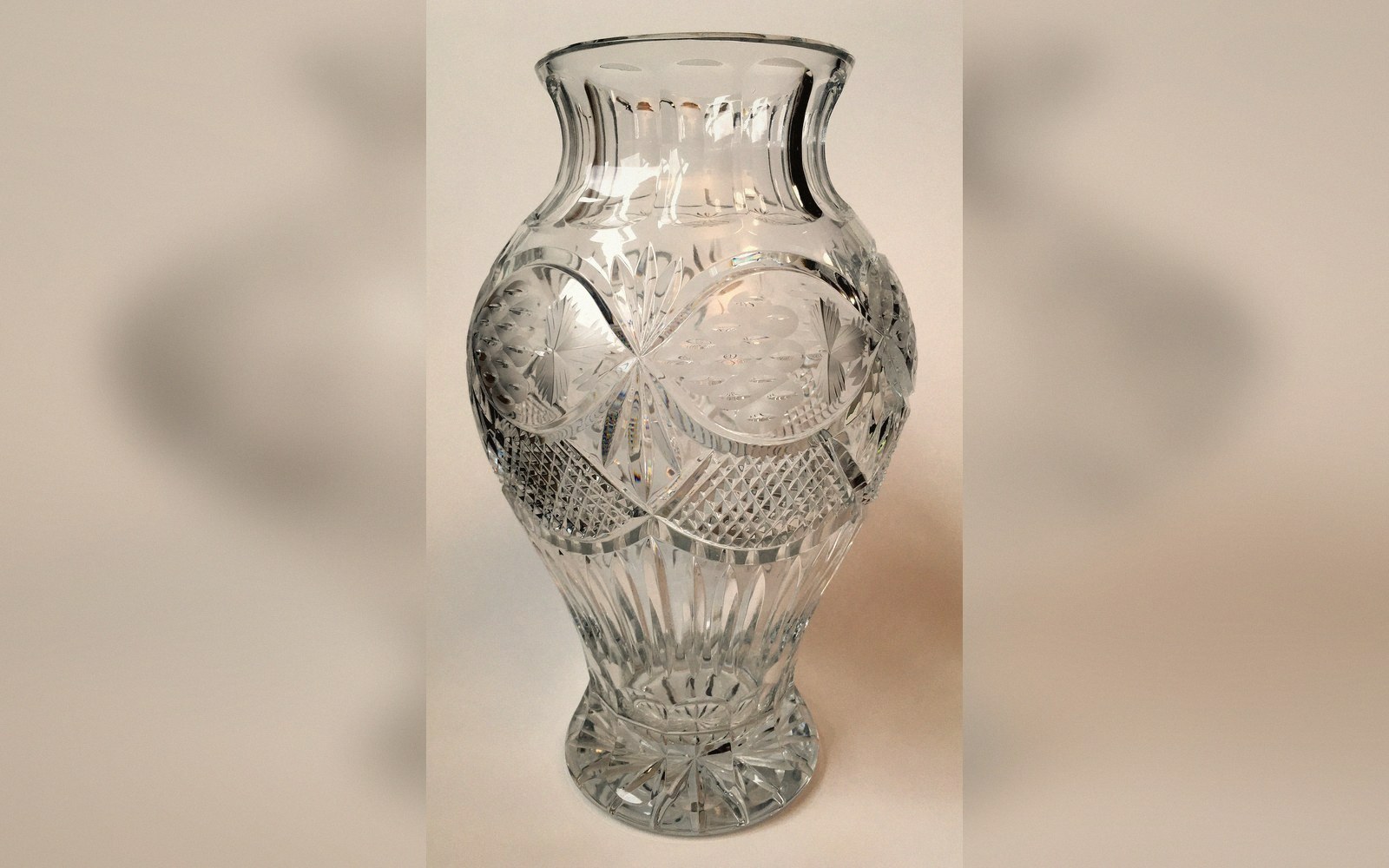
To transfer the piece from the blowpipe to a solid rod called the pontil (or punty), a second gather is applied to the base, the blowpipe end is chilled with a damp cloth and tapped sharply to crack it free, and the piece is now held at the base for finishing the rim. This transfer is a moment of some risk: a poorly centred pontil, or a piece that has cooled unevenly, can crack at the join. The open top can be flared with jacks, cut with shears, or left as a fire-polished rim — each finish is visible in the completed piece if you know what to look for.
Materials and method
06 Glass · lifted out of the flow| Blowpipe | hollow iron rod used to gather and blow the glass |
| Gather | the mass of molten glass collected from the furnace pot |
| Paraison | the blown blank from which the final form is developed |
| Glory hole | the reheating furnace that restores workability between stages |
| Marvering | rolling the gather on a flat iron or steel plate to centre and cool the outer skin |
| Jacks | spring tongs used to neck, open or shape the form during blowing |
| Pontil (punty) | solid iron rod attached to the base for finishing once the blowpipe is removed |
| Lehr | the annealing tunnel kiln; a slow, controlled cooling descent from around 500 °C |
The final stage is the annealing lehr, a long tunnel kiln through which the pieces travel on a slow conveyor, dropping from around 500 °C to room temperature over the course of several hours. Glass cooled quickly accumulates internal stress invisible to the eye but capable of shattering a piece days or weeks later. The lehr removes that risk.
A gather on the end of an iron, breath, and a working window measured in seconds.
What survives and why
Hand blowing persists not because it is cheaper — it is not — but because it produces surfaces, irregularities and optical qualities that mould-blown or machine-made glass cannot replicate. The slight gather marks, the faint spiralling of colour in a cased piece, the fire polish on a finished rim: these are consequences of the process, not decorative choices applied afterwards. At makers such as Dartington Crystal in Torrington, Devon, and the handful of studio glassmakers working in smaller workshops across Britain, the same sequence — gather, marver, blow, reheat, transfer, finish, anneal — runs in precisely the order it has run for around two thousand years. The iron changes nothing essential; the breath is still the engine.